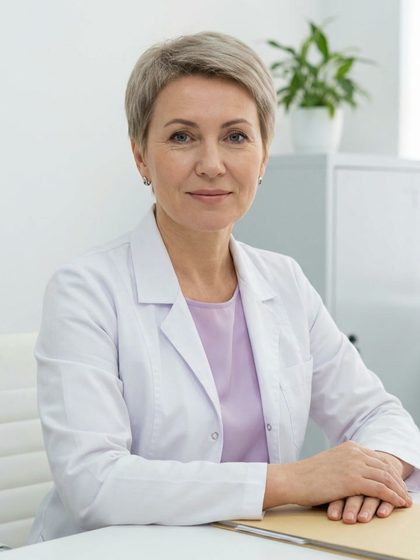
Reviewed byOlga Smirnova, MDAddiction psychiatrist, experience 27 years · updated 8 Nov 2026
Key facts
- ICD-10 code
- F10.2
- Who provides it
- A psychiatrist-narcologist or a psychotherapist trained in suggestion-based methods
- Where
- At the clinic in Khromtau; the session takes place in a calm setting, individually or in a group
- Duration
- The preparatory conversation and session take 1.5–3 hours; the commitment lasts for a period chosen with the patient
- Confidentiality
- No documents and no registry entry; information about the session is protected by medical confidentiality
- When it is an emergency
- Thoughts of self-harm, acute anxiety or psychotic symptoms — call 103 or 112
- Outcome
- A psychological commitment to sobriety as part of a comprehensive treatment program
What you should know
The method was developed in the USSR in the 1980s as a form of stress psychotherapy and became widespread in CIS countries under the name “coding.” Its essence is suggestion delivered in a state of heightened receptiveness, reinforced by the emotionally charged setting of the session. It is important to understand that international clinical guidelines (WHO, NICE) do not list the method among treatments with proven effectiveness; its results depend largely on the patient's motivation and suggestibility.
A Narcology 24 doctor provides Dovzhenko coding in Khromtau honestly, without mystification: they explain that it is a psychotherapeutic technique, not “brain programming,” and that the result is sustained by the person's own decision. The method can be useful for those who cannot have medication-based treatments and for those who respond well to suggestion. A conversation, an assessment of mental state and a sobriety check are mandatory before the session.
Who the Dovzhenko method is suitable for
- people with alcohol dependence who themselves want to stop drinking
- those who cannot have medication-based methods because of heart or liver disease
- patients who respond well to suggestion and emotional support
- those who are ready to stay sober for the required period before the session
- people who prefer methods that do not involve medication
- those who are also in psychotherapy or attend support groups
- people without psychotic disorders, epilepsy or severe depression
If heavy drinking has lasted more than two or three days, or there is shaking, vomiting, blood-pressure spikes or insomnia, you need a doctor rather than stopping alone. Phone advice is free. For seizures, confusion or hallucinations call 103 or 112.
How suggestion-based psychotherapy works
Suggestion is a natural psychological phenomenon: the words of an authoritative specialist in an emotionally intense situation can shape lasting attitudes and expectations. The Dovzhenko method uses this to reinforce the patient's decision not to drink. Preparation, belief in the method, the ritual of the session and later reminders of the commitment made all play a part.
The method's limitations stem from the fact that it does not affect the biological mechanisms of dependence and does not teach skills for coping with cravings and stress. If a person does not agree with the decision to stay sober or has come under pressure from relatives, the effect will be weak. That is why the doctor regards the session not as a stand-alone treatment but as one tool alongside psychotherapy and family support.
How a Dovzhenko coding session works
Stage 1 — a consultation, which can start online: the doctor learns about the drinking history, motivation, previous treatment and any other illnesses. Stage 2 — an in-person conversation, an assessment of mental state and a sobriety check. Stage 3 — an explanation of how the method works and signing the informed consent form. Stage 4 — the suggestion session. Stage 5 — recommendations, discussion of the commitment period, and a plan of consultations and psychotherapy.
The session is not carried out if the person is intoxicated or in withdrawal, or has psychotic disorders, severe depression, suicidal thoughts, epilepsy or marked cognitive impairment, or if the person does not agree to the procedure. The online format is not used for the session itself — only for the preliminary consultation. If life is at risk, call 103 or 112.
How we help
Preliminary consultation
The doctor asks the patient in detail about their drinking history, relapses, reasons for seeking help and expectations. Mental state is assessed, including anxiety, depression and psychotic symptoms. A key part is finding out whether the decision to stay sober has been made by the person themselves. If motivation is insufficient, the doctor may suggest starting with motivational psychotherapy.
Preparing for the session
Before the session, the patient must stay sober for a period set by the doctor. If there are signs of withdrawal, detox is carried out first. The patient is told what will happen during the session and that the method is psychotherapeutic and does not involve medication. An informed consent form specifying the commitment period is signed.
The suggestion session
The doctor starts with a conversation that builds trust and then moves on to the suggestion phase: while the patient is in a state of focused attention, they are given a commitment to refrain from alcohol for the chosen period. The session may be individual or in a group. Afterward, the doctor gives recommendations and answers questions from the patient and relatives.
Support after the session
For the commitment to work, it needs reinforcing: scheduled consultations with an addiction physician or psychotherapist, cognitive behavioral therapy, work on triggers and mutual-help groups. Narcology 24 offers this kind of follow-up support. If thoughts about drinking come up, they should be discussed with a specialist rather than hidden.
Myths and facts
MythThe Dovzhenko method “reprograms” the brain
FactIt is a psychotherapeutic suggestion technique, not an intervention in how the brain works. It helps reinforce the decision to stay sober, but it does not change the biology of dependence and does not replace other treatment.
MythIf you drink after the session, you will die
FactThe method does not involve giving any medication and does not cause a physical reaction to alcohol. Scare tactics go against modern medical ethics. However, a relapse is a reason to see a doctor urgently and continue treatment.
MythThe method works the same way for everyone
FactThe result depends on suggestibility, motivation and support after the session. For some people it helps for a long time, for others it does not, which is why the doctor sees it as one option within the overall treatment plan.
How a home visit works
- Call or message usThe dispatcher answers 24/7 and in 3–5 minutes checks the person's condition, age, how long the drinking or use has lasted, chronic conditions and the address. No surname needed.
- The doctor sets offAn addiction doctor or psychiatrist comes with equipment and medication. Travel time depends on the district — usually within an hour. If inpatient care or an ambulance is needed, we'll say so straight away.
- Examination and treatmentBlood pressure, pulse, oxygen saturation, blood sugar if needed and a neurological check. Then an IV drip or other treatment as indicated, 1–3 hours.
- A plan for the next daysAdvice for the family on what to do overnight and tomorrow, phone follow-up and a repeat visit if needed.
- Further treatmentCoding, psychotherapy, rehab or psychiatric follow-up — once the acute state has passed and the person is ready.
Prices in Khromtau
| Consultation and assessment before the procedure | 8 000 ₸ |
| Procedure (standard) | 40 000 ₸ |
| Procedure (extended) | 64 000 ₸ |
| Phone advice | free |
The final cost is agreed before treatment starts. Prices are in tenge and do not constitute a public offer.
Where to get help
Narcology 24 in Khromtau: our duty team makes home visits day and night, usually within an hour (all city districts and nearby settlements). Two branches for appointments and procedures — 105 Lenina St., Khromtau and 121 Abaya St., office 11, Khromtau. When indicated, we arrange admission and transport.
Confidential and private
in Khromtau our doctor can come in ordinary clothes in an unmarked car. Treatment documents are given only to the patient. If you need a certificate or sick note, this is discussed separately and only at your request.
Questions and answers
How long do you need to stay sober before the session?
The doctor sets the sobriety period at the consultation; it is usually at least several days. The main thing is that at the time of the session the patient shows no signs of intoxication or withdrawal. If withdrawal is severe, detox is carried out first, at home or in an inpatient unit.
Can you be coded with the Dovzhenko method if you do not want it?
No. The method is based on suggestion, which works only with the person's own consent and participation. Besides, any medical intervention requires voluntary informed consent. If the person has come under pressure, the doctor will suggest starting with a motivational conversation.
How long does the commitment last?
The period is chosen together with the patient — usually from several months to several years. The doctor recommends a realistic period that the person is ready to keep and offers support throughout. When it ends, an extension or a different method can be discussed.
Does the method have contraindications?
Yes: psychotic disorders, severe depression, suicidal thoughts, epilepsy, marked problems with memory and thinking, and intoxication. Before the session, the doctor assesses the patient's mental state to rule out situations in which the method could cause harm.
Can the method be combined with other treatments?
Yes, and this is recommended. The session combines well with psychotherapy, support groups and family therapy. It can also be combined with medication support if this is not contraindicated. A combined approach increases the chances of stable remission.
What should I do if I relapse?
A relapse does not mean that treatment is pointless. It is important to see a Narcology 24 doctor as soon as possible to assess your condition, carry out detox if needed and review the treatment plan. A psychotherapist will help you work through the causes of the relapse and strengthen the skills for staying sober.
Where do doctors visit in Khromtau and where are the branches?
Home visits cover all city districts and nearby settlements, 24/7. Appointments at two branches: 105 Lenina St., Khromtau and 121 Abaya St., office 11, Khromtau. Phone in Khromtau: +7 (700) 309-30-65.
Sources and methodology
This page was prepared by the Narcology 24 medical editorial team based on:
- International Classification of Diseases ICD-10 and ICD-11, World Health Organization
- Clinical diagnosis and treatment protocols of the Ministry of Health of the Republic of Kazakhstan
- Code of the Republic of Kazakhstan “On Public Health and the Healthcare System”
- NICE (UK) guidelines on alcohol and drug misuse and mental health conditions
- WHO recommendations on the treatment of substance use disorders
This information is for reference only and does not replace a consultation with a specialist. Editorial policy