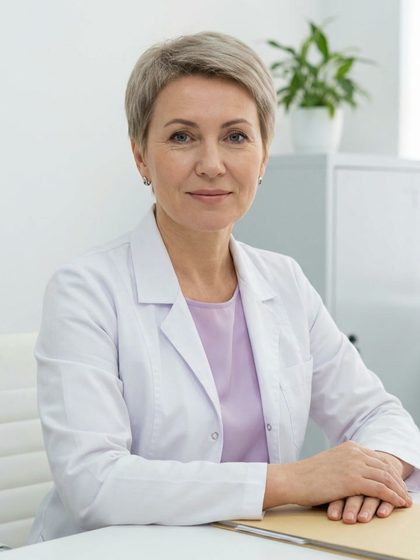
Reviewed byOlga Smirnova, MDAddiction psychiatrist, experience 27 years · updated 8 Nov 2026
Key facts
- ICD-10 code
- F11.3
- Who provides it
- A psychiatrist-narcologist; in severe cases, the inpatient unit team
- Where
- At home in Aktobe for mild to moderate cases; in an inpatient unit for complications and mixed substance use
- Duration
- The acute phase of opioid withdrawal usually lasts 5–10 days; residual symptoms can last for weeks
- Confidentiality
- Anonymous treatment with no registry entry; medical confidentiality under the laws of the Republic of Kazakhstan
- When it is an emergency
- Suspected overdose, slow breathing, seizures, psychosis or suicidal thoughts — call 103 or 112
- Outcome
- Acute withdrawal symptoms are controlled and the patient moves on to treatment for the addiction
What you should know
“Lomka” is the colloquial Russian word for withdrawal syndrome, most often opioid withdrawal. In ICD-10, opioid withdrawal is coded F11.3, and withdrawal from other substances has the corresponding codes in the F10–F19 section. The condition shows up as muscle and joint pain, chills, watery eyes, a runny nose, dilated pupils, diarrhea, nausea, insomnia, anxiety and intense cravings for the substance. Although opioid withdrawal is rarely directly life-threatening, it is agonizing and almost always leads to relapse without medical help.
Drug withdrawal treatment in Aktobe at Narcology 24 follows the principles of symptomatic and detox therapy set out in clinical protocols. The approach depends on the substance: withdrawal from opioids, stimulants, benzodiazepines and synthetic drugs follows different courses and carries different risks. Stopping benzodiazepines and barbiturates, for example, can cause seizures, so it is done only gradually and under supervision. The doctor decides where treatment should take place after an examination.
Signs of withdrawal syndrome
- aching pain in the muscles, joints and lower back a few hours after the last dose
- chills, goosebumps, sweating, watery eyes and a runny nose
- dilated pupils, yawning, sneezing and increased sensitivity to light
- nausea, vomiting, stomach cramps, diarrhea and rapid fluid loss
- insomnia, restlessness, irritability and being unable to sit still
- a rapid pulse, raised blood pressure and fever
- obsessive cravings for the substance that are hard to control
If heavy drinking has lasted more than two or three days, or there is shaking, vomiting, blood-pressure spikes or insomnia, you need a doctor rather than stopping alone. Phone advice is free. For seizures, confusion or hallucinations call 103 or 112.
Why withdrawal develops and why it is dangerous
With regular opioid use, the body produces fewer of its own endorphins and receptor sensitivity changes. When the substance stops coming in, the systems it was suppressing — the autonomic nervous system, the pain system and the stress system — become overactive. This is how withdrawal syndrome arises. Its severity depends on the substance, how long it has been used, the dose and the person's overall health.
The main danger is not withdrawal itself but what comes after it. After a few days without the substance, tolerance drops, and going back to the previous dose can cause a fatal overdose. In addition, vomiting and diarrhea cause dehydration, and coexisting heart disease or HIV infection makes the course more severe. That is why treating withdrawal should always be linked to further treatment right away.
How withdrawal syndrome is treated
An initial assessment can be done by phone or video: the doctor asks about the substance, how long and how it has been used (without details, only to assess risks), the time of the last use and any other illnesses. The addiction doctor then comes to the patient, or the patient is admitted to hospital. The doctor carries out an examination and, with consent, a rapid drug test, starts IV therapy and prescribes medications to relieve pain, nausea, anxiety and insomnia.
Treatment is not provided at home in cases of mixed substance use, withdrawal from benzodiazepines, barbiturates or pregabalin, seizures, psychotic symptoms, serious infections or pregnancy, or when there is no adult to stay with the patient. If a person's breathing is slow and shallow, they do not respond when spoken to, or their lips turn blue, these are signs of an overdose — call 103 or 112 immediately.
How we help
Assessment and risk stratification
The severity of opioid withdrawal is assessed using standardized scales such as COWS. The doctor takes into account the substance, how long it has been used, other medical conditions, mental state and the support available at home. Based on this, the doctor chooses the format: outpatient monitoring with home visits or inpatient detox with round-the-clock supervision.
Detox therapy
IV solutions replace the fluids and electrolytes lost through vomiting and diarrhea and support kidney and liver function. Vitamins are added and, when indicated, liver-protecting drugs and medications that protect the stomach lining. The volume and composition are tailored individually, taking into account weight, blood pressure and test results, if available.
Symptom relief
To relieve pain, cramps, nausea, anxiety and insomnia, medications from the appropriate groups are used: non-opioid painkillers, antispasmodics, anti-nausea drugs, medications that reduce sympathetic nervous system activity, and sedatives. Benzodiazepines are used sparingly and only as prescribed by a doctor because of the risk of a new dependence.
Moving on to addiction treatment
Controlling withdrawal is the first step, not the end of treatment. Once the patient is stable, the next steps are discussed: psychotherapy, rehab, and medication to support remission, including opioid receptor antagonists after the necessary period of abstinence and assessment. Working with the family helps reduce the risk of relapse in the first months.
Myths and facts
MythYou can sit out withdrawal at home without a doctor
FactSometimes a person gets through the first few days, but the risk of relapse and overdose after a period of abstinence is very high. Under a doctor's supervision, symptoms are eased, and a treatment plan lowers the chance of going back to using.
MythWithdrawal can be relieved with a single drip
FactThe acute phase of opioid withdrawal lasts several days, and insomnia, weakness and cravings continue after it. One procedure makes the person feel better but does not complete the treatment of withdrawal or addiction.
MythOnce withdrawal is over, the addiction is gone
FactPhysical dependence decreases, but psychological dependence remains. Without psychotherapy, rehab and support, most people go back to using, which is why treatment continues after detox.
How a home visit works
- Call or message usThe dispatcher answers 24/7 and in 3–5 minutes checks the person's condition, age, how long the drinking or use has lasted, chronic conditions and the address. No surname needed.
- The doctor sets offAn addiction doctor or psychiatrist comes with equipment and medication. Travel time depends on the district — usually within an hour. If inpatient care or an ambulance is needed, we'll say so straight away.
- Examination and treatmentBlood pressure, pulse, oxygen saturation, blood sugar if needed and a neurological check. Then an IV drip or other treatment as indicated, 1–3 hours.
- A plan for the next daysAdvice for the family on what to do overnight and tomorrow, phone follow-up and a repeat visit if needed.
- Further treatmentCoding, psychotherapy, rehab or psychiatric follow-up — once the acute state has passed and the person is ready.
Prices in Aktobe
| Home visit and examination | 13 500 ₸ |
| IV drip at home (standard) | 27 000 ₸ |
| IV drip at home (extended) | 40 500 ₸ |
| Phone advice | free |
The final cost is agreed before treatment starts. Prices are in tenge and do not constitute a public offer.
Where to get help
Narcology 24 in Aktobe: our duty team makes home visits day and night, usually within an hour (all city districts and nearby settlements). Two branches for appointments and procedures — 50 Ayteke bi St., Aktobe and 112 Sankibay batyra Ave., Aktobe. When indicated, we arrange admission and transport.
Confidential and private
Information about your request, diagnosis and treatment is protected by medical confidentiality under the Code of the Republic of Kazakhstan “On Public Health and the Healthcare System”. We do not share it with employers, schools, the police or neighbours; the only exceptions are those expressly set by law. A first name is enough to call us, and paid confidential treatment does not mean a registry entry.
Questions and answers
How long does withdrawal last?
When stopping short-acting opioids, symptoms appear after 6–12 hours, peak on day 2–3 and mostly subside by day 5–10. With long-acting substances, everything starts later and lasts longer. Insomnia, weakness and cravings may persist for weeks.
Can withdrawal be treated anonymously?
Yes. Treatment at Narcology 24 is anonymous and does not involve registration with the state narcology registry. Information about your visit is protected by medical confidentiality under the Code of the Republic of Kazakhstan “On Public Health and the Healthcare System” and is disclosed only in cases provided for by law.
What if the person does not want treatment?
Treatment is possible only on a voluntary basis if the person has legal capacity; in Kazakhstan, compulsory treatment is allowed only by court order. The family can get a consultation with an addiction physician or psychotherapist to understand how to talk to their loved one and what to do in dangerous situations.
Why is it dangerous to use again after a few days' break?
During abstinence, tolerance drops, and a dose that used to be “normal” can suppress breathing. This is exactly the period when the risk of a fatal overdose is especially high. If the person is unconscious or breathing slowly, call 103 or 112 immediately.
Is inpatient care needed to treat withdrawal?
Inpatient care is recommended in cases of mixed substance use, withdrawal from sedatives, serious coexisting illnesses, psychotic symptoms, failed attempts at outpatient treatment and a lack of support at home. In other cases, treatment at home with regular doctor visits is possible.
Where can a teenager turn for help?
It is important for a teenager to tell an adult they trust about the problem. Anonymous support is available on the free 150 helpline for children and young people. Medical care for minors is provided with the involvement of their legal guardians.
Where do doctors visit in Aktobe and where are the branches?
Home visits cover all city districts and nearby settlements, 24/7. Appointments at two branches: 50 Ayteke bi St., Aktobe and 112 Sankibay batyra Ave., Aktobe. Phone in Aktobe: +7 (700) 309-30-65.
Sources and methodology
This page was prepared by the Narcology 24 medical editorial team based on:
- International Classification of Diseases ICD-10 and ICD-11, World Health Organization
- Clinical diagnosis and treatment protocols of the Ministry of Health of the Republic of Kazakhstan
- Code of the Republic of Kazakhstan “On Public Health and the Healthcare System”
- NICE (UK) guidelines on alcohol and drug misuse and mental health conditions
- WHO recommendations on the treatment of substance use disorders
This information is for reference only and does not replace a consultation with a specialist. Editorial policy