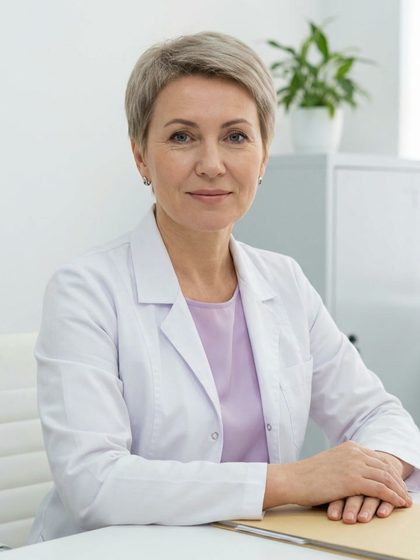
Reviewed byOlga Smirnova, MDAddiction psychiatrist, experience 27 years · updated 8 Nov 2026
Key facts
- ICD-10 code
- F11.3
- Who provides care
- An addiction physician; a psychotherapist works with the patient and the family
- Where
- At home in mild and moderate cases, or in an inpatient unit
- Duration
- The acute phase usually lasts 5–10 days, followed by recovery and addiction treatment
- Anonymity
- Medical confidentiality, no registry with paid anonymous care
- When it is urgent
- Loss of consciousness, slow breathing, seizures, suicidal thoughts — call 103 or 112 immediately
- Outcome
- Fewer withdrawal symptoms, stabilization and a plan for further treatment
What you should know
If you are reading this, you have most likely found out or suspect that your loved one is using drugs, and right now they are feeling very ill. Withdrawal frightens relatives: the person is restless, complains of pain all over their body, has chills, cannot sleep, and may ask for money or try to leave the house. We will explain what is happening to them medically, how to behave right now, what you must not do, and how to get medical help without publicity.
Opioid withdrawal syndrome (ICD-10 F11.3) rarely threatens life in itself, but it is extremely painful, and because of this the person often goes back to using. The danger rises when substances are mixed, when there is heart disease, and when the person tries to “get through it” with alcohol or pills. The Narcology 24 doctor comes to any district of Astana, assesses the condition and decides whether treatment at home is safe or an inpatient unit is needed.
What the family may see during drug withdrawal
- chills, goosebumps, a runny nose, watery eyes, frequent yawning
- complaints of aching pain in the muscles, joints, back and legs
- dilated pupils, sweating, a rapid pulse, blood pressure swings
- nausea, vomiting, diarrhea, refusal to eat or drink, rapidly growing weakness
- severe anxiety and irritability; the person cannot sit still
- insomnia, restlessness at night, requests for money or to be let out of the house
- sudden mood changes, tears, despair or statements that life is meaningless
If heavy drinking has lasted more than two or three days, or there is shaking, vomiting, blood-pressure spikes or insomnia, you need a doctor rather than stopping alone. Phone advice is free. For seizures, confusion or hallucinations call 103 or 112.
Why withdrawal happens and why it is hard to get through alone
With regular use of opioids and some other substances, the body gets used to them and stops regulating pain, sleep, bowel function and mood normally. When the substance is no longer taken, all these systems “break down”: pain, chills, anxiety and insomnia appear. This is not pretending or weak willpower but a physiological reaction that requires medical treatment and support.
The hardest part of withdrawal is the intense craving, which can make the person relapse, leave home or take money. In Astana in winter, this is doubly dangerous: in frost and wind, a weakened person outdoors quickly becomes hypothermic. The period after withdrawal is especially risky: tolerance to the substance drops, and the usual amount can lead to an overdose. That is why it is important not only to relieve the symptoms but also to continue treatment.
How drug withdrawal treatment works: steps for loved ones
First, you can talk to a doctor by phone or video without the patient present. You describe what you see, and the doctor tells you how urgently help is needed. During the house call, the addiction doctor examines the person, assesses blood pressure, pulse, breathing and consciousness, and finds out which substances were used and how long ago. IV drips, symptomatic treatment, and medications for sleep and anxiety are prescribed by the doctor. The doctor agrees with the family on monitoring and follow-up visits.
Treatment at home is not possible if the person has used a mix of substances, or if there is a suspected overdose, slow breathing, seizures, psychosis, suicidal statements, serious heart or liver disease, or pregnancy — or if there is no one who can stay with them. In such cases, an inpatient unit is needed, and if life is at risk, call 103 or 112. The clinic does not carry out treatment without the patient’s consent.
How we help
Assessment of the condition and risks
The doctor finds out which substances were used, for how long and when last, and whether there have been overdoses, seizures or illnesses. He checks breathing, blood pressure, pulse and consciousness. If relatives know the details, tell the doctor honestly — he does not pass this information to the police. It is needed to choose a safe treatment.
Symptomatic therapy
Treatment aims to reduce pain, anxiety, insomnia, nausea and diarrhea and to replace fluids. Detoxification solutions, vitamins, and medications for sleep and anxiety are used strictly as prescribed by the doctor. There are no “one-size-fits-all” regimens: the treatment is chosen according to the person’s condition and changes as they improve.
Inpatient care for severe cases
If it is unsafe at home or a relapse is very likely, the doctor will suggest the Narcology 24 inpatient unit: round-the-clock observation, treatment and no access to substances. For the family, it is a chance to breathe out and not keep watch day and night. Admission to a private clinic is only voluntary, with the patient’s written consent.
What comes after withdrawal
Treating withdrawal is only the beginning. Next come addiction psychotherapy, a discussion with the doctor about medication support — for example, an opioid blockade with opioid receptor antagonists after a medical workup — and rehab. The psychologist also works with the family: how to offer support without controlling every step, and how to protect yourself and your children.
Myths and facts
MythWithdrawal just has to be endured at home, “on willpower”
FactWithout help, the symptoms can be very severe, and most people relapse. Medical treatment makes withdrawal more bearable and safer, and the doctor will notice complications in time. This is not weakness but a sensible choice.
MythYou can get through withdrawal with alcohol or sleeping pills
FactMixing alcohol, sleeping pills and opioids is dangerous because it suppresses breathing and can be fatal. Do not give your loved one such substances without a doctor’s prescription. If they are drowsy, breathing slowly or have blue lips, call 103 or 112.
MythIf you see a doctor, they will report you to the police
FactAddiction care on a paid anonymous basis is protected by medical confidentiality under the Code of the Republic of Kazakhstan “On Public Health and the Healthcare System.” Information is disclosed only in cases expressly provided for by law.
How a home visit works
- Call or message usThe dispatcher answers 24/7 and in 3–5 minutes checks the person's condition, age, how long the drinking or use has lasted, chronic conditions and the address. No surname needed.
- The doctor sets offAn addiction doctor or psychiatrist comes with equipment and medication. Travel time depends on the district — usually within an hour. If inpatient care or an ambulance is needed, we'll say so straight away.
- Examination and treatmentBlood pressure, pulse, oxygen saturation, blood sugar if needed and a neurological check. Then an IV drip or other treatment as indicated, 1–3 hours.
- A plan for the next daysAdvice for the family on what to do overnight and tomorrow, phone follow-up and a repeat visit if needed.
- Further treatmentCoding, psychotherapy, rehab or psychiatric follow-up — once the acute state has passed and the person is ready.
Prices in Astana
| Home visit and examination | 15 000 ₸ |
| IV drip at home (standard) | 30 000 ₸ |
| IV drip at home (extended) | 45 000 ₸ |
| Phone advice | free |
The final cost is agreed before treatment starts. Prices are in tenge and do not constitute a public offer.
Where to get help
In astana you can get help at home, at one of our two branches (6 Auezova St., office 37, Astana, 176 Imanova St., Astana) or online if you need a consultation rather than a procedure. The dispatcher answers 24/7 and will tell you straight away which option is safest.
Confidential and private
Information about your request, diagnosis and treatment is protected by medical confidentiality under the Code of the Republic of Kazakhstan “On Public Health and the Healthcare System”. We do not share it with employers, schools, the police or neighbours; the only exceptions are those expressly set by law. A first name is enough to call us, and paid confidential treatment does not mean a registry entry.
Questions and answers
How should I talk to my loved one if I suspect drug use?
Calmly, when the person is sober, without searches or interrogations. Talk about what you see and how you feel: “I can see you’re not doing well, and I’m worried.” Suggest talking to a doctor together. Threats and shouting usually make people shut down. A psychologist can help you prepare for this conversation.
Can drug withdrawal be treated at home?
In mild and moderate cases, if only one substance was used, there are no serious illnesses and an adult is nearby to keep watch — often yes. If there is mixed substance use, past overdoses, psychosis or a risk of the person leaving home, an inpatient unit is safer. The doctor makes the decision after an examination.
How long does drug withdrawal last?
With opioid withdrawal, acute symptoms usually build up over the first few days and then gradually subside; the acute phase lasts about 5–10 days depending on the substance. Sleep problems, anxiety and cravings may persist longer. That is why treatment does not end once the symptoms are relieved.
What should the family not do during withdrawal?
Do not give money “for medicine,” alcohol or sleeping pills without a doctor’s prescription, and do not lock the person up by force or threaten them. Do not leave them alone if they talk about death — call 103 or 112. If your loved one is under 18, you can also call the 150 helpline.
How can loved ones look after themselves?
Relatives of people with addiction often live in constant anxiety and guilt. You do not have to cope alone. Our psychologist offers family consultations, including online — convenient if you work a demanding schedule or live in another city.
What should we do if a teenager is going through withdrawal?
Do not shame or punish them; see a doctor. Treatment of minors is carried out with the consent of their legal representatives in the manner established by the law of the Republic of Kazakhstan. A teenager can call the 150 helpline anonymously. If there are signs of an overdose, call 103 or 112 immediately.
Where do doctors visit in Astana and where are the branches?
Home visits cover all city districts and nearby settlements, 24/7. Appointments at two branches: 6 Auezova St., office 37, Astana and 176 Imanova St., Astana. Phone in Astana: +7 (700) 309-30-17.
Sources and methodology
This page was prepared by the Narcology 24 medical editorial team based on:
- International Classification of Diseases ICD-10 and ICD-11, World Health Organization
- Clinical diagnosis and treatment protocols of the Ministry of Health of the Republic of Kazakhstan
- Code of the Republic of Kazakhstan “On Public Health and the Healthcare System”
- NICE (UK) guidelines on alcohol and drug misuse and mental health conditions
- WHO recommendations on the treatment of substance use disorders
This information is for reference only and does not replace a consultation with a specialist. Editorial policy