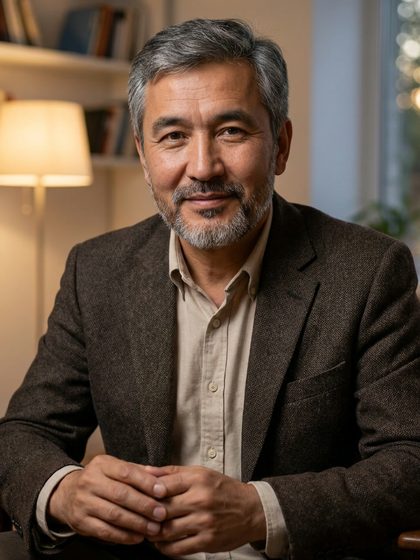
Reviewed byArman Magzhanov, MDPsychiatrist, experience 24 years · updated 8 Nov 2026
Key facts
- Who conducts it
- A clinic psychiatrist, together with a psychotherapist if necessary
- Where
- At the clinic, at the patient's home, or by video call — the family chooses
- Duration
- The first appointment takes 40–60 minutes; follow-ups are scheduled according to the doctor's plan
- Anonymity
- No registration at the state dispensary; the only exceptions are those expressly provided for by the law of Kazakhstan
- When it's urgent
- Suicidal thoughts with a plan, aggression, hallucinations, or confusion — call 103 or 112
- Outcome
- A preliminary assessment, recommendations, and, if necessary, further tests and treatment
What you should know
What holds families back most is fear: “they'll put him on the registry,” “they'll find out at work,” “they won't let her get a driver's license later.” Because of this, relatives spend months putting up with a loved one's insomnia, outbursts, and strange talk, hoping it will all pass. An anonymous consultation at Narcology 24 is a paid service with no registration at the state psychoneurological dispensary (PND); medical confidentiality is protected by law, and you decide for yourself what personal information to share.
A relative does not need to wait until the person is ready. You can come on your own, describe what you see at home, and find out whether it looks like an illness and how urgent it is. In Astana, many people live far from their older relatives and work shifts or rotational schedules, so the question “who can I turn to without anyone finding out” is especially pressing. A consultation gives the family something solid to rely on: clear facts instead of guesswork and a concrete plan of action.
What Families Notice Before Booking a Psychiatrist Appointment
- persistent low mood and indifference to everything that used to bring joy
- frequent anxiety attacks, fear of leaving the house or using public transport
- compulsive actions: repeated checking, hand-washing, counting
- sharp swings: periods of energy without sleep followed by complete exhaustion
- suspiciousness, talking to invisible people, strange beliefs
- thoughts of death and phrases like “you'd all be better off without me”
- using alcohol or sedatives to cope with how they feel
If two or three points apply, it is worth seeing a doctor. Phone advice is free and confidential. If life is at risk, call 103 or 112.
Why You Shouldn't Put Off a Consultation
Many mental disorders — depression, anxiety disorders, bipolar disorder, psychoses — respond better to treatment in the early stages. While the family waits, the person may lose their job, ruin relationships, or start numbing their state with alcohol. An early consultation does not mean that strong medication will be prescribed right away: sometimes psychotherapy, a healthy routine, and monitoring are enough, but that decision should be made by a doctor after an assessment.
Relatives often try to cope on their own: they urge the person to “pull themselves together,” keep checking up on them, and hide the problem from others. This wears everyone out and rarely helps. A psychiatrist will explain which changes are caused by the illness rather than by personality and advise you on how to behave at home. In Astana, where many people have demanding schedules and responsible jobs on the left bank, anonymity is especially valuable: it lets people seek help without fearing for their reputation.
How an Anonymous Psychiatrist Appointment Works
When booking, you don't have to give your full name: the administrator will only ask how to address you and which format is most convenient. Before the appointment, gather discharge summaries, medical reports, and a list of medications, and write down the main changes with dates. During the consultation, the psychiatrist will listen to the patient and the family, ask about sleep, mood, thoughts, and substance use, and assess the risks. At the end, the doctor will explain their preliminary conclusions and suggest a plan: monitoring, further tests, psychotherapy, or medication.
A consultation at the clinic or by video is not suitable for acute conditions: if the person is threatening themselves or others, doesn't know where they are, sees things that aren't there, or is severely intoxicated. Call 103 or 112. Anonymity has its limits: medical confidentiality may be breached only in cases expressly provided for by the law of Kazakhstan — for example, at the request of a court or when there is a risk of spreading dangerous diseases.
How we help
Initial diagnostic interview
The psychiatrist asks about the symptoms, how long they have lasted, the events after which everything started, family history, and past illnesses. Standard psychiatric clinical criteria based on ICD-10 and ICD-11 are used. Sometimes the doctor suggests questionnaires and rating scales — they help assess the severity of the condition more precisely but do not replace the conversation.
Consultation for relatives
If your loved one refuses to come, come on your own. The doctor will go through the situation, explain which signs are dangerous, and teach you how to talk so that the person doesn't feel pressured. The family receives specific recommendations: what to do today, what to watch for at night and on weekends, and when to call emergency services.
Prescribing and adjusting treatment
If medication is needed, the doctor selects it individually and explains how it works, how long it takes to have an effect, and what side effects can occur. Drug names and regimens are discussed only during the appointment. Treatment must not be stopped or changed without the doctor: this is a common cause of relapses, and relatives should be aware of it.
Referral to psychotherapy
Many people benefit from combining treatment by a psychiatrist with psychotherapy. A Narcology 24 psychotherapist or psychologist holds individual sessions with the patient and separate sessions with the family. A psychologist does not prescribe medication but helps the person learn to manage anxiety, restore a healthy routine, and improve communication within the family.
Myths and facts
MythAnonymous means the doctor won't really help
FactAnonymity applies only to registration and disclosure. The help is the same: a conversation, an assessment, prescribed treatment, and ongoing support. The doctor works with the information you are willing to share. The scope of care does not change.
MythOnly people who are “really ill” see a psychiatrist
FactMost appointments are about anxiety, insomnia, depression, and panic attacks. An early consultation helps avoid severe episodes and lengthy treatment. It is ordinary medical care.
MythAfter the appointment you'll definitely be prescribed pills
FactNot always. It depends on the person's condition: sometimes psychotherapy, monitoring, and changes to daily routine are enough. If treatment is needed, the doctor will explain why and for how long. The decision is always made together with you.
How a home visit works
- Call or message usThe dispatcher answers 24/7 and in 3–5 minutes checks the person's condition, age, how long the drinking or use has lasted, chronic conditions and the address. No surname needed.
- The doctor sets offAn addiction doctor or psychiatrist comes with equipment and medication. Travel time depends on the district — usually within an hour. If inpatient care or an ambulance is needed, we'll say so straight away.
- Examination and treatmentBlood pressure, pulse, oxygen saturation, blood sugar if needed and a neurological check. Then an IV drip or other treatment as indicated, 1–3 hours.
- A plan for the next daysAdvice for the family on what to do overnight and tomorrow, phone follow-up and a repeat visit if needed.
- Further treatmentCoding, psychotherapy, rehab or psychiatric follow-up — once the acute state has passed and the person is ready.
Prices in Astana
| Online psychiatrist consultation | 15 000 ₸ |
| In-person psychiatrist consultation | 18 000 ₸ |
| Psychiatrist home visit | 40 000 ₸ |
| Phone advice | free |
The final cost is agreed before treatment starts. Prices are in tenge and do not constitute a public offer.
Where to get help
“Confidential psychiatrist consultation” in Astana is available 24/7, including weekends. Home visits: all city districts and nearby settlements. For appointments, Narcology 24 has two branches: 6 Auezova St., office 37, Astana and 176 Imanova St., Astana. If you live elsewhere in Astana and Akmola Region, call us and we'll advise the fastest way to get help.
Confidential and private
in Astana our doctor can come in ordinary clothes in an unmarked car. Treatment documents are given only to the patient. If you need a certificate or sick note, this is discussed separately and only at your request.
Questions and answers
Do I need an ID for an anonymous consultation?
For an anonymous appointment, the name you'd like to be called is enough. Documents may be needed if you want official certificates or medical reports. The administrator will tell you what is required in your particular case. Your data are not entered into any external registries.
Will my employer find out about the appointment?
No. The clinic does not pass information to employers, colleagues, or acquaintances. Medical confidentiality is protected by the Code of the Republic of Kazakhstan “On Public Health and the Healthcare System,” and disclosure is possible only in cases expressly provided for by law.
Can I come to the consultation together with my loved one?
Yes, and it is often helpful. The doctor spends part of the conversation with the patient alone and part with the family. If the person feels uncomfortable speaking in front of relatives, the doctor will talk with each of you separately and then sum up together. That way the family and the patient hear the same thing.
How many consultations are needed?
Sometimes one appointment is enough to understand what to do. With depression, anxiety disorders, or bipolar disorder, a course of follow-up with regular appointments is usually needed; how often depends on the person's condition and the chosen treatment. In Astana, it is convenient to alternate in-person appointments with video calls.
What should I do if my loved one denies there is a problem?
Don't argue and don't give ultimatums. Talk about what you see without judgment: “You haven't slept for three nights; I'm worried.” Suggest a consultation as a conversation about sleep or fatigue. Book an appointment with the doctor yourself to get advice.
Will a consultation affect my driver's license?
A paid anonymous consultation does not lead to registration at the state dispensary. Medical examinations for a driver's license are handled in the manner established by law. If this worries you, discuss it with the doctor during the appointment.
Where do doctors visit in Astana and where are the branches?
Home visits cover all city districts and nearby settlements, 24/7. Appointments at two branches: 6 Auezova St., office 37, Astana and 176 Imanova St., Astana. Phone in Astana: +7 (700) 309-30-17.
Sources and methodology
This page was prepared by the Narcology 24 medical editorial team based on:
- International Classification of Diseases ICD-10 and ICD-11, World Health Organization
- Clinical diagnosis and treatment protocols of the Ministry of Health of the Republic of Kazakhstan
- Code of the Republic of Kazakhstan “On Public Health and the Healthcare System”
- NICE (UK) guidelines on alcohol and drug misuse and mental health conditions
- WHO recommendations on the treatment of substance use disorders
This information is for reference only and does not replace a consultation with a specialist. Editorial policy