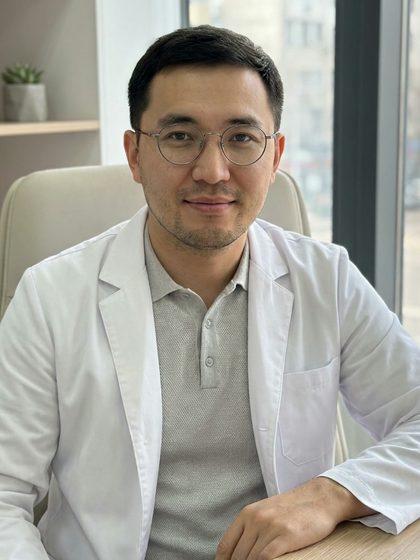
Reviewed byNurlan Isayev, MDAddiction psychiatrist, experience 10 years · updated 8 Nov 2026
Key facts
- ICD-10 code
- F11.2
- Who provides it
- An addiction doctor, a psychiatrist, a psychotherapist, and inpatient medical staff
- Where
- Detox — in an inpatient unit; follow-up care — on an outpatient basis and online
- Duration
- Acute stage — from several days to 2 weeks; recovery — months
- Anonymity
- No registry; medical confidentiality under the Code of the Republic of Kazakhstan “On Public Health”
- When it is urgent
- Slow breathing, bluish skin, no response to voice — call 103 or 112 immediately
- Outcome
- Safe relief of withdrawal, reduced cravings, and a recovery program
What you should know
Families of people with opioid dependence live in constant fear: every unanswered call could mean an overdose. Parents sell belongings to pay off debts, wives hide valuables, and the person, between episodes of use, sincerely repents and promises to stop. Opioids create a strong physical dependence, and without medical help it is very hard to get out of it. But treatment exists, and the chances improve when the family acts together with the doctors.
In Astana, relatives often learn about the problem unexpectedly: from things they find, from a call from the police or a hospital, from money suddenly disappearing. Sometimes the dependence begins with painkillers prescribed after an injury or surgery. Narcology 24 specialists help the family calmly assess the situation, understand the risks, and organize treatment so that the person is not left alone with withdrawal and does not relapse in the very first days.
Signs of Opioid Dependence the Family Notices
- pinpoint pupils, drowsiness, “nodding off” in the middle of a conversation
- slowed speech, sluggishness, and indifference that alternate with restlessness
- without the substance — runny nose, yawning, muscle aches, chills, diarrhea
- long sleeves in any weather, injection marks, bruises on the arms
- money and belongings going missing, debts, constant “urgent” requests
- frequent constipation, loss of appetite, weight loss, pale skin
- syringes, tourniquets, or unfamiliar unpackaged pills found at home
If two or three points apply, it is worth seeing a doctor. Phone advice is free and confidential. If life is at risk, call 103 or 112.
Why Opioid Dependence Is Especially Dangerous
Opioids act on brain receptors responsible for pain, pleasure, and breathing. Tolerance grows quickly, and stopping causes a pronounced withdrawal syndrome — being “dope sick” — which in itself is rarely fatal but pushes the person toward relapse. The main threat is an overdose with respiratory depression. The period after detox or release from prison is especially dangerous: tolerance drops, and the usual amount can turn out to be lethal.
Opioid use is linked to other risks as well: infections (HIV, hepatitis B and C) with injection use, blood clots, abscesses, and legal and financial problems. It is important for the family to know the signs of an overdose and to act instantly, without fear of the consequences for themselves. In winter in Astana, a person who loses consciousness outdoors may die not only from an overdose but also from hypothermia.
How Opioid Dependence Treatment Works
The first step is often an online consultation for relatives: the doctor assesses the situation and explains how to prepare the person for hospital admission. Detox is carried out in an inpatient unit under round-the-clock supervision, and withdrawal symptoms are relieved with medications prescribed by the doctor. Afterward, tests are carried out, including for infections, and relapse prevention therapy is discussed. Then psychotherapy and rehab begin, with the family taking part.
Relieving opioid withdrawal at home without supervision is risky: the risk of relapse is high, and combining opioids with alcohol or sedatives can cause breathing to stop. If the person does not respond to your voice, breathes slowly or with a rattling sound, or their lips are turning blue, call 103 or 112 immediately, lay them on their side, and stay with them. The clinic does not replace emergency care in case of an overdose.
How we help
Inpatient detox
Under doctors’ supervision, pain, insomnia, anxiety, and the gastrointestinal symptoms of withdrawal are relieved. Symptomatic therapy is used as prescribed, and fluid balance and sleep are restored. The doctor monitors blood pressure, pulse, and mood, since the risk of depression is high during this period. It usually takes from several days to two weeks.
Relapse prevention therapy
After the body has been fully cleared and tests have been done, the doctor may offer opioid receptor antagonists, which block the effect of opioids (an opioid blockade). This is done only with written informed consent and after the required period of abstinence. Such therapy is one of the options recommended by the WHO, but it works only in combination with psychotherapy.
Psychotherapy and rehab
A psychotherapist helps the person cope with cravings, understand their triggers, and rebuild the skills of everyday life: routine, work, relationships. Group work provides support from people with similar experiences. At Narcology 24, the program is built individually and takes the person’s mental state into account, since opioid dependence is often combined with depression and anxiety.
Preparing the family and preventing overdose
Relatives learn to recognize the signs of an overdose and to know whom to call and what to do before the ambulance arrives. They discuss how to support the person after discharge without controlling every step, and how to respond to a relapse. The family also receives its own support, because years of living in fear leave a deep mark.
Myths and facts
MythWithdrawal can kill, so it is better to give him a dose
FactOpioid withdrawal is agonizing but in itself rarely life-threatening, whereas using again can end in an overdose. The right path is medical detox, where symptoms are relieved safely. Do not buy the substance or give it to your loved one.
MythOnce the withdrawal is over, he is cured
FactPhysical dependence goes away within days, but psychological cravings persist for months. Without further treatment, the risk of relapse is very high. And the first relapse after a break is especially dangerous because of reduced tolerance.
MythIf you call an ambulance, he will be sent to jail
FactThe ambulance team’s job is to save a life. In an overdose, delay can cost a life, so call 103 or 112 right away. Seeking medical help is the first priority; all other questions are dealt with later.
How a home visit works
- Call or message usThe dispatcher answers 24/7 and in 3–5 minutes checks the person's condition, age, how long the drinking or use has lasted, chronic conditions and the address. No surname needed.
- The doctor sets offAn addiction doctor or psychiatrist comes with equipment and medication. Travel time depends on the district — usually within an hour. If inpatient care or an ambulance is needed, we'll say so straight away.
- Examination and treatmentBlood pressure, pulse, oxygen saturation, blood sugar if needed and a neurological check. Then an IV drip or other treatment as indicated, 1–3 hours.
- A plan for the next daysAdvice for the family on what to do overnight and tomorrow, phone follow-up and a repeat visit if needed.
- Further treatmentCoding, psychotherapy, rehab or psychiatric follow-up — once the acute state has passed and the person is ready.
Prices in Astana
| Initial addiction doctor consultation | 12 000 ₸ |
| Inpatient detox (per day) | 35 000 ₸ |
| Psychotherapy course (8 sessions) | 96 000 ₸ |
| Phone advice | free |
The final cost is agreed before treatment starts. Prices are in tenge and do not constitute a public offer.
Where to get help
In astana you can get help at home, at one of our two branches (6 Auezova St., office 37, Astana, 176 Imanova St., Astana) or online if you need a consultation rather than a procedure. The dispatcher answers 24/7 and will tell you straight away which option is safest.
Confidential and private
Information about your request, diagnosis and treatment is protected by medical confidentiality under the Code of the Republic of Kazakhstan “On Public Health and the Healthcare System”. We do not share it with employers, schools, the police or neighbours; the only exceptions are those expressly set by law. A first name is enough to call us, and paid confidential treatment does not mean a registry entry.
Questions and answers
How can I recognize an overdose?
The person does not respond to voice or touch, breathes slowly or with a rattling sound, their lips and nails turn blue, and their pupils are very small. Call 103 or 112 immediately, lay them on their side, watch their breathing, and do not leave them alone. Do not try to “wake them up” with cold water or other substances.
Can withdrawal be managed at home?
It is not safe: the risk of relapse and overdose is high, as is the risk of dangerous combinations with alcohol and sedatives. Detox for opioid dependence is usually carried out in an inpatient unit. A doctor, by phone or online, will help you arrange hospital admission and prepare for it.
How can I persuade him to go to an inpatient unit?
Talk about your care and your fear for his life, not about shame. Offer one concrete step: a consultation with a doctor who will explain how detox can be done without suffering. Arrange a bed in the inpatient unit in advance so as not to lose time. A consultation for relatives will help you choose the right words.
Is testing for infections necessary?
Yes, with injection use, testing for HIV and hepatitis B and C is essential. This matters for the health of the person and the family. Testing is anonymous. If an infection is found, the doctor will tell you where to go for treatment, and the family will learn how to protect themselves.
What should the family do after discharge?
Remove from the home any medications that could be dangerous, support a routine and meaningful activity, and stay in touch with the doctor. Discuss a plan in case of cravings and relapse. Remember: after a break, tolerance is reduced, and the risk of overdose is especially high. Do not hesitate to call 103 or 112.
Do you serve the suburbs of Astana?
Yes, consultations are held online for families from any district of Astana, as well as Kosshy, Koyandy, and the surrounding region. For detox, the doctor will help arrange hospital admission. If there are signs of an overdose, do not wait — call 103 or 112; it is faster than any private service.
Where do doctors visit in Astana and where are the branches?
Home visits cover all city districts and nearby settlements, 24/7. Appointments at two branches: 6 Auezova St., office 37, Astana and 176 Imanova St., Astana. Phone in Astana: +7 (700) 309-30-17.
Sources and methodology
This page was prepared by the Narcology 24 medical editorial team based on:
- International Classification of Diseases ICD-10 and ICD-11, World Health Organization
- Clinical diagnosis and treatment protocols of the Ministry of Health of the Republic of Kazakhstan
- Code of the Republic of Kazakhstan “On Public Health and the Healthcare System”
- NICE (UK) guidelines on alcohol and drug misuse and mental health conditions
- WHO recommendations on the treatment of substance use disorders
This information is for reference only and does not replace a consultation with a specialist. Editorial policy