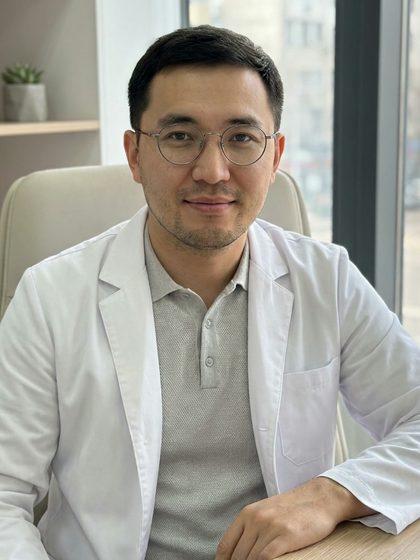
Reviewed byNurlan Isayev, MDAddiction psychiatrist, experience 10 years · updated 8 Nov 2026
Key facts
- ICD-10 code
- F19
- Who provides care
- An addiction medicine doctor, a psychiatrist for psychosis and depression, a psychotherapist, and a rehab counselor
- Where
- Inpatient care for detox, home visits in Astana when the condition is stable, online support for loved ones
- Duration
- Detox takes 7–14 days; treatment and rehab last 3 months or longer
- Confidentiality
- Medical confidentiality under the law of the Republic of Kazakhstan, paid anonymous treatment, no registry
- When it’s urgent
- Loss of consciousness, slow breathing, seizures, psychosis, chest pain — call 103 or 112 immediately
- Outcome
- Recovery from the acute state, a treatment plan, rehab, and support for the family
What you should know
Families often learn about polysubstance addiction only after something bad has already happened: an ambulance call, an arrest, debts. Before that, they saw strange shifts in the person’s state — agitation one moment, heavy drowsiness the next, sometimes the smell of alcohol, sometimes pills in a pocket. The person may claim they “just had a drink,” when in fact they were mixing several substances. If this picture sounds familiar, it is important to act calmly and quickly: such combinations are a real threat to life.
In Astana we often deal with situations where a young person has come from another region to study or work, lives alone in the Yesil or Baikonur district, and the parents learn about the problem over the phone. We consult relatives online, wherever they are, and arrange for a doctor to visit the address if needed. Our task is to relieve the acute condition and then help build long-term treatment and rehab.
Signs that loved ones notice
- sudden and unpredictable shifts in state: agitation followed by deep drowsiness
- the smell of alcohol combined with signs that ordinary drunkenness can’t explain
- things found at home: loose pills without packaging, syringes, small baggies, smoking blends
- frequent “food poisoning,” fainting, ambulance calls, and injuries of unknown origin
- debts, selling belongings, stealing from relatives, trouble with the law
- insomnia, anxiety, aggression, suspiciousness, thoughts of death
- rapidly declining health: weight loss, skin problems, frequent infections
If two or three points apply, it is worth seeing a doctor. Phone advice is free and confidential. If life is at risk, call 103 or 112.
Why people move on to multiple substances
Polysubstance addiction often begins with a single substance, and others are added over time: to intensify the effect, to soften withdrawal, to fall asleep, or, on the contrary, to perk up. That is how alcohol gets combined with sleeping pills and stimulants with sedatives. Each new substance changes how the body tolerates the others, and the person loses any sense of how much is dangerous. This is precisely why the risk of overdose and respiratory depression is so high in polysubstance addiction.
Risk factors include starting to use at an early age, mental health conditions (depression, anxiety, ADHD, traumatic experiences), a social circle where people use, loneliness, and a lack of support. Many people who have moved to the capital from the regions find themselves without their usual circle of friends and slide into addiction without noticing. This is not a matter of weak willpower: addiction is a brain disorder described in ICD-10, and it is treated by doctors.
How help works: steps for the family and the patient
Relatives call or join a video consultation: the doctor asks which substances, for how long, when the last use was, and whether there are chronic illnesses or past overdoses. If the condition is stable, an addiction doctor makes a home visit in Astana, examines the person, relieves acute symptoms, and discusses hospitalization. In polysubstance addiction, detox is more often carried out in a hospital setting, where breathing, blood pressure, heart function, and mental state are monitored. Then comes a treatment and rehab program.
Treating at home is dangerous if the person has taken several depressant substances (alcohol, sleeping pills, opioids), is hard to wake, or has seizures, psychosis, chest pain, vomits blood, or talks about suicide — call 103 or 112. Breathing and neurological status cannot be assessed over video, so an online consultation serves only for preparation and follow-up, not for treating an acute condition.
How we help
Inpatient detox
Under round-the-clock supervision, the doctor provides IV infusion therapy with detoxifying solutions and prescribes B vitamins, liver-protecting medications, and drugs to manage withdrawal as indicated. Because the substances are different, their withdrawal syndromes overlap, so the treatment regimen is tailored individually. The goal is to safely bring the body out of the acute state and prepare it for further treatment.
Diagnosis and dual diagnosis
The addiction doctor and the psychiatrist find out whether depression, an anxiety disorder, the effects of trauma, or bipolar disorder lie behind the substance use. If so, they are treated at the same time, as international guidelines recommend. The liver, heart, and any infections are assessed as well. A full picture makes it possible to build a plan that genuinely lowers the risk of returning to substances.
Rehab program
After detox, the person needs long-term work: residential or outpatient rehab, group and individual psychotherapy, and learning the skills for a life without substances. It lasts from several months. We help the family choose the format: living at a center, or keeping work and studies going with evening sessions.
Work with loved ones
The family receives psychotherapist consultations: how to talk to the person, what to do if there is a risk of overdose, how not to support the drug use with money or by covering debts, and how to protect themselves and their children. We tell relatives about mutual support groups for families and help them restore their own strength so their support can last.
Myths and facts
MythMixing small amounts is safe
FactThere are no safe combinations. Substances amplify each other’s effects, and even habitual amounts can stop a person’s breathing. According to the WHO, mixing substances is one of the main causes of fatal overdoses.
MythIt’s enough to get rid of the main drug
FactWith polysubstance addiction, a person often switches to another substance — alcohol or pills. The addiction has to be treated as a whole, not one substance at a time; otherwise the problem simply changes its form.
MythThe family can’t do anything until he wants it himself
FactLoved ones can do a great deal: get a consultation, stop covering up the consequences, and stay in contact and ready to help. Research supports family-based approaches that increase the chances that the person will agree to treatment.
How a home visit works
- Call or message usThe dispatcher answers 24/7 and in 3–5 minutes checks the person's condition, age, how long the drinking or use has lasted, chronic conditions and the address. No surname needed.
- The doctor sets offAn addiction doctor or psychiatrist comes with equipment and medication. Travel time depends on the district — usually within an hour. If inpatient care or an ambulance is needed, we'll say so straight away.
- Examination and treatmentBlood pressure, pulse, oxygen saturation, blood sugar if needed and a neurological check. Then an IV drip or other treatment as indicated, 1–3 hours.
- A plan for the next daysAdvice for the family on what to do overnight and tomorrow, phone follow-up and a repeat visit if needed.
- Further treatmentCoding, psychotherapy, rehab or psychiatric follow-up — once the acute state has passed and the person is ready.
Prices in Astana
| Initial addiction doctor consultation | 12 000 ₸ |
| Inpatient detox (per day) | 35 000 ₸ |
| Psychotherapy course (8 sessions) | 96 000 ₸ |
| Phone advice | free |
The final cost is agreed before treatment starts. Prices are in tenge and do not constitute a public offer.
Where to get help
Narcology 24 in Astana: our duty team makes home visits day and night, usually within an hour (all city districts and nearby settlements). Two branches for appointments and procedures — 6 Auezova St., office 37, Astana and 176 Imanova St., Astana. When indicated, we arrange admission and transport.
Confidential and private
Information about your request, diagnosis and treatment is protected by medical confidentiality under the Code of the Republic of Kazakhstan “On Public Health and the Healthcare System”. We do not share it with employers, schools, the police or neighbours; the only exceptions are those expressly set by law. A first name is enough to call us, and paid confidential treatment does not mean a registry entry.
Questions and answers
How can I tell that the person is taking more than one substance?
Be alert if their state doesn’t look like ordinary drunkenness: the smell of alcohol combined with pinpoint or dilated pupils, drowsiness alternating with agitation, pills and other substances turning up. An examination by an addiction doctor and lab tests, done anonymously, will help determine it for certain.
What should I do right now if the person won’t wake up?
Call 103 or 112. While the medical team is on the way, lay them on their side, check their breathing, don’t give them water or pills, and don’t leave them alone. In winter in Astana, never take them outside “for some fresh air” in the frost and wind — hypothermia develops quickly in an intoxicated person.
Is hospital admission mandatory?
With polysubstance addiction, inpatient care is recommended more often than with dependence on a single substance, because withdrawal from several substances is unpredictable. If the condition is stable and the risks are low, the doctor may start treatment at home with daily monitoring. The decision is made after the examination.
Will information about the treatment be recorded anywhere?
Narcology 24 works anonymously, without registration on the state dispensary registry. Information about the patient is protected by medical confidentiality under the Code of the Republic of Kazakhstan “On Public Health and the Healthcare System”. We do not pass data on to employers, schools, or relatives without the patient’s consent, except in cases specified by law.
Can someone be sent to treatment against their will?
The clinic does not use force and does not “take” anyone away. Involuntary treatment is possible only by court decision, following the procedure established by the law of the Republic of Kazakhstan. But the family can prepare the ground: a consultation, a conversation with a specialist present, and clear boundaries. Many people agree once they see they are not being judged.
How can relatives cope with constant fear?
Fearing for a loved one’s life is exhausting. Psychotherapist consultations for the family, mutual support groups for relatives, and sharing the load among family members all help. Be sure to work out an emergency plan: the numbers 103 and 112, the address, and documents. This reduces panic at the critical moment.
Where do doctors visit in Astana and where are the branches?
Home visits cover all city districts and nearby settlements, 24/7. Appointments at two branches: 6 Auezova St., office 37, Astana and 176 Imanova St., Astana. Phone in Astana: +7 (700) 309-30-17.
Sources and methodology
This page was prepared by the Narcology 24 medical editorial team based on:
- International Classification of Diseases ICD-10 and ICD-11, World Health Organization
- Clinical diagnosis and treatment protocols of the Ministry of Health of the Republic of Kazakhstan
- Code of the Republic of Kazakhstan “On Public Health and the Healthcare System”
- NICE (UK) guidelines on alcohol and drug misuse and mental health conditions
- WHO recommendations on the treatment of substance use disorders
This information is for reference only and does not replace a consultation with a specialist. Editorial policy