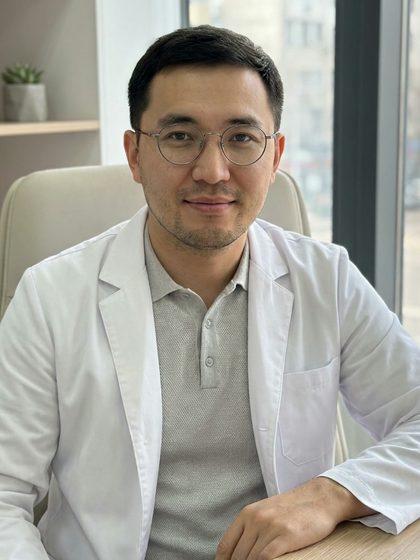
Reviewed byNurlan Isayev, MDAddiction psychiatrist, experience 10 years · updated 8 Nov 2026
Key facts
- ICD-10 code
- F19.2
- Who provides care
- An addiction doctor (narcologist), a psychiatrist, a psychotherapist, and rehab specialists
- Where
- Examination at home in Almaty, detox in the inpatient unit, rehab
- Duration
- Detox — 7 to 21 days; rehab — 3 months or longer
- Anonymity
- Anonymous treatment with no entry in the state dispensary registry
- When it is urgent
- Slowed breathing, loss of consciousness, seizures, or psychosis — call 103 or 112 immediately
- Outcome
- Safe detox, treatment of mental health disorders, and a program to give up all substances
What you should know
Told by the on-call doctor of our mobile team. When the dispatcher hears “he uses everything,” the call is immediately treated as a priority. We will ask about each substance: what, how much, when last used, whether the person drank alcohol or took pills, and whether there have been seizures, overdoses, or loss of consciousness. Family members often do not know everything, and that is normal — we ask them to describe what they have seen: syringes, blister packs, small baggies, bottles, and the person’s behavior over the past day.
A typical night scene: an apartment in the Turksib or Alatau district, a person who has gone without sleep for three days after taking stimulants and is now “knocking themselves out” with alcohol and sleeping pills. This combination is dangerous because it can suppress breathing. That is why, with polysubstance use, I am honest with the family: in most cases, at home we can only stabilize the person and prepare them for transfer to the inpatient unit. If breathing is slow, the person will not wake up, or their lips turn blue, call 103 or 112 immediately — do not wait for us.
Signs of Polysubstance Addiction
- using several substances at the same time or one after another within a day
- replacing one substance with another when the first is unavailable
- periods of agitation and sleeplessness alternating with sluggishness and drowsiness
- a history of overdoses, loss of consciousness, and ambulance calls
- psychotic episodes, paranoid thoughts, sudden mood swings
- rapid decline in health, weight loss, infections, trouble with the law
- giving up one substance only to use more of another
If two or three points apply, it is worth seeing a doctor. Phone advice is free and confidential. If life is at risk, call 103 or 112.
Why Dependence on Several Substances Develops
Most often, polysubstance addiction grows out of dependence on a single substance. The person tries to soften the effects of one drug with another: “bringing themselves down” from stimulants with alcohol or sedatives, or relieving opioid withdrawal with pills. Over time, dependence on each of them develops. Combining substances increases toxicity and makes withdrawal unpredictable, because the symptoms of different withdrawal syndromes overlap.
Risk factors include starting drug use at an early age, traumatic experiences, depression, anxiety and personality disorders, ADHD, a social circle in which various substances are used, and easy access to medications. In ICD-10, this condition is coded as a disorder due to multiple drug use. Treatment requires the involvement of both an addiction doctor and a psychiatrist at the same time.
How the Home Visit and Transfer to Inpatient Care Work
While the team is on its way, the dispatcher advises family members on how to monitor breathing and consciousness. On arrival, I check vital signs, oxygen saturation, pupils, and neurological status, and look for signs of overdose and psychosis. If the person’s condition allows, we start IV therapy with detox solutions and symptomatic treatment. Then comes the conversation about inpatient care: if the person agrees, we arrange transportation. In the morning, they are examined at the inpatient unit by an addiction doctor and a psychiatrist, and a detox plan is drawn up.
We almost never treat polysubstance addiction at home: the risk of unpredictable withdrawal, seizures, and psychosis is too high. Absolute reasons to call 103 or 112 are: slowed breathing, unconsciousness, seizures, chest pain, high fever, and aggression that threatens someone’s life. Treatment without consent is possible only by court order, in the manner established by the law of the Republic of Kazakhstan.
How we help
Inpatient detox
Carried out under round-the-clock supervision with monitoring of breathing and heart rhythm. Detox solutions, B vitamins, liver-protecting medications, and symptomatic therapy are used; drugs that affect the nervous system are given only as prescribed by a doctor. The withdrawal of each substance is planned with the combinations in mind.
Treatment of mental health disorders
People with polysubstance addiction are often found to have depression, anxiety disorders, or psychotic episodes. A Narcology 24 psychiatrist makes a diagnosis after detox, when the symptoms are no longer masked by the effects of the substances, and selects treatment that does not cause dependence. If there is a history of psychosis, the treatment plan is discussed with the family, and psychiatric follow-up continues after discharge.
Rehab program
After detox, rehab is essential — inpatient or outpatient, lasting several months or longer. It includes individual and group psychotherapy, work on cravings, and rebuilding daily routines, skills, and social connections. The goal is to give up all psychoactive substances, not to swap one for another. The format is chosen together with the patient.
Working with the family
Family members receive counseling on how to support their loved one’s sobriety, how not to take on responsibility that belongs to them, and how to recognize the warning signs of relapse. Family sessions can be held online — convenient if relatives live in different parts of the city or outside it, for example in Kaskelen or Konaev. This is an important part of treatment.
Myths and facts
MythIt is enough to give up the “hardest” substance
FactWith polysubstance addiction, replacing one substance with another is a typical path to relapse. Treatment is aimed at giving up all psychoactive substances, including alcohol; otherwise the addiction simply takes another form.
MythAlcohol and pills after stimulants help you “come back to your senses”
FactIt is exactly these combinations that most often lead to suppressed breathing and death. If, after using, a person is sluggish and breathing poorly, they need an ambulance (103 or 112), not attempts to “calm them down” at home.
MythPolysubstance addiction cannot be cured
FactIt is a severe chronic disease, but with detox, treatment of mental health disorders, and long-term rehab, many people achieve stable remission. Time, consistency, and support are what matter.
How a home visit works
- Call or message usThe dispatcher answers 24/7 and in 3–5 minutes checks the person's condition, age, how long the drinking or use has lasted, chronic conditions and the address. No surname needed.
- The doctor sets offAn addiction doctor or psychiatrist comes with equipment and medication. Travel time depends on the district — usually within an hour. If inpatient care or an ambulance is needed, we'll say so straight away.
- Examination and treatmentBlood pressure, pulse, oxygen saturation, blood sugar if needed and a neurological check. Then an IV drip or other treatment as indicated, 1–3 hours.
- A plan for the next daysAdvice for the family on what to do overnight and tomorrow, phone follow-up and a repeat visit if needed.
- Further treatmentCoding, psychotherapy, rehab or psychiatric follow-up — once the acute state has passed and the person is ready.
Prices in Almaty
| Initial addiction doctor consultation | 12 000 ₸ |
| Inpatient detox (per day) | 35 000 ₸ |
| Psychotherapy course (8 sessions) | 96 000 ₸ |
| Phone advice | free |
The final cost is agreed before treatment starts. Prices are in tenge and do not constitute a public offer.
Where to get help
“Polysubstance addiction” in Almaty is available 24/7, including weekends. Home visits: all city districts and nearby settlements. For appointments, Narcology 24 has two branches: 84 Zhandosova St., Almaty and 21 Seyfullina Ave., office 11, Almaty. If you live elsewhere in Almaty and Almaty Region, call us and we'll advise the fastest way to get help.
Confidential and private
in Almaty our doctor can come in ordinary clothes in an unmarked car. Treatment documents are given only to the patient. If you need a certificate or sick note, this is discussed separately and only at your request.
Questions and answers
Why can’t polysubstance addiction be treated at home?
The withdrawal syndromes of different substances overlap, and the person’s condition can deteriorate sharply: seizures, psychosis, breathing and heart rhythm problems. Only round-the-clock supervision can ensure safety. At home, the doctor stabilizes the person and helps arrange the transfer to the inpatient unit.
How long does treatment take?
Detox usually takes one to three weeks, depending on the substances and the person’s health. Rehab lasts from three months, followed by ongoing support. The doctor gives exact timelines after the examination and tests. Treatment does not end at discharge.
What should we tell the doctor if we don’t know what he was using?
Tell them everything you have seen: packaging, syringes, bottles, behavior, sleep, and when the person last seemed normal. Keep any packaging you find. The doctor will learn a lot from the examination, and lab tests in the inpatient unit will clarify the picture. Do not throw anything away.
Can we call a doctor anonymously?
Yes. We do not require any documents for a home visit; treatment is provided anonymously and with no registry entry. Medical confidentiality is protected by the Code of the Republic of Kazakhstan “On Public Health and the Healthcare System,” with exceptions only as provided for by law.
Will you come to the suburbs at night?
Yes, we make visits 24/7, including to Kaskelen, Talgar, Otegen Batyr, and Konaev. Travel time is longer than within the city, so if there is a threat to life, call 103 or 112 first, and then call us for further treatment. The dispatcher will immediately give you an estimated arrival time based on road conditions.
What can the family do while he is not ready for treatment?
Book a consultation with a psychotherapist — in person or online. Family members get help setting boundaries, stopping paying for drug use, and preparing for the conversation about treatment. This increases the chance that the person will agree to get help.
Where do doctors visit in Almaty and where are the branches?
Home visits cover all city districts and nearby settlements, 24/7. Appointments at two branches: 84 Zhandosova St., Almaty and 21 Seyfullina Ave., office 11, Almaty. Phone in Almaty: +7 (700) 309-29-88.
Sources and methodology
This page was prepared by the Narcology 24 medical editorial team based on:
- International Classification of Diseases ICD-10 and ICD-11, World Health Organization
- Clinical diagnosis and treatment protocols of the Ministry of Health of the Republic of Kazakhstan
- Code of the Republic of Kazakhstan “On Public Health and the Healthcare System”
- NICE (UK) guidelines on alcohol and drug misuse and mental health conditions
- WHO recommendations on the treatment of substance use disorders
This information is for reference only and does not replace a consultation with a specialist. Editorial policy