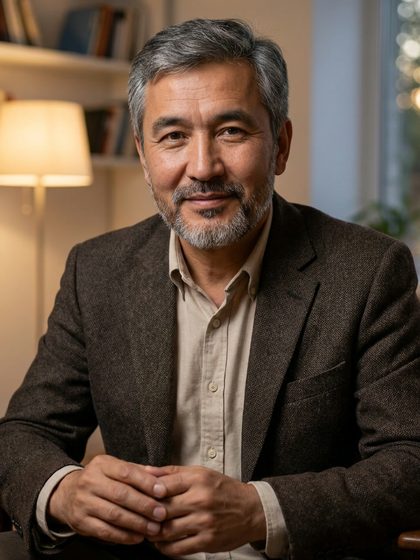
Reviewed byArman Magzhanov, MDPsychiatrist, experience 24 years · updated 8 Nov 2026
Key facts
- ICD-10 code
- F41.1
- Who provides care
- A psychiatrist and a psychotherapist
- Where
- An office in Almaty, online by video, home visits
- Duration
- Improvement in 3–6 weeks, a course of 6 months or more
- Anonymity
- No documents or registration required, medical confidentiality
- When it’s urgent
- Chest pain, shortness of breath, fainting — call 103 first to rule out heart disease
- Outcome
- Less anxiety, normal sleep, a return to everyday life
What you should know
Anxiety rarely leads to an emergency call, but people often call at night. The person can’t fall asleep, their heart is pounding, and their thoughts keep circling around work, children, and health. They have called an ambulance three times this week, had an ECG and blood tests — everything is normal, but the fear remains. In such cases, the dispatcher usually suggests starting with a video call: the on-call psychiatrist can help the person calm down right now and arrange a full consultation.
At appointments, I see a similar picture. The person is tense, sits on the edge of the chair, often asks me to repeat things, and nervously fiddles with their phone. They understand perfectly well that they worry too much but can’t stop. Many live like this for years and consider it part of their character. My task is to show them that it can be treated, rule out physical causes such as thyroid or heart disease, and find the kind of help that suits this particular person.
Symptoms of an anxiety disorder
- constant worry about work, health, or loved ones that is hard to stop
- muscle tension, headaches, a lump in the throat, trembling hands
- trouble falling asleep because of racing thoughts, light sleep, frequent waking
- irritability, a short temper, a feeling of being “on edge”
- a racing heart, sweating, stomach problems with no cause found on tests
- avoiding trips, calls, or meetings that used to be easy
- difficulty concentrating, a constant sense that something bad is about to happen
If two or three points apply, it is worth seeing a doctor. Phone advice is free and confidential. If life is at risk, call 103 or 112.
Where anxiety comes from
Anxiety disorders are among the most common conditions in psychiatry. Heredity, the characteristics of a person’s nervous system, childhood experiences, and chronic stress all play a role in their development. Anxiety often begins after a specific event: a loved one’s illness, job loss, an accident, or a move. Life in a big city with its pace and traffic, when the commute from lower Almaty to the upper part becomes a daily ordeal, adds to the strain as well.
Habits also keep anxiety going: lots of coffee and energy drinks, lack of sleep, working without days off, constantly reading the news. Many people relieve tension with alcohol or with sedatives taken without a prescription, and this only makes the anxiety worse the next day. Importantly, anxiety symptoms can occur with thyroid disease, heart arrhythmias, and anemia, so the doctor starts by ruling out physical causes.
How anxiety treatment works: from first contact to results
Many people start with a video consultation — it is convenient for those who are afraid to leave home or live far away, in the Alatau district or in Talgar. The doctor asks about the symptoms, how long they have lasted, sleep, caffeine, alcohol, and medications. Have your test results ready if you have already seen a cardiologist or an endocrinologist. At the end, the doctor explains the diagnosis and suggests a plan: psychotherapy, medication, or a combination. Follow-up meetings take place in 2 weeks and then once a month.
An anxiety disorder usually does not require a hospital stay. But if chest pain, severe shortness of breath, fainting, slurred speech, or weakness in an arm appear for the first time, call 103 first: a heart attack, stroke, or pulmonary embolism must be ruled out. Inpatient care may be needed when anxiety is combined with severe depression, suicidal thoughts, or dependence on sedatives.
How we help
Diagnosis and ruling out other illnesses
The psychiatrist clarifies the nature of the anxiety, its triggers, how long it has lasted, and its connection to events. They use anxiety rating scales. If no tests have been done yet, they order basic ones: thyroid hormones, a complete blood count, and an ECG. This matters so as not to treat anxiety when the cause is another illness, and not to send the person from doctor to doctor endlessly.
Cognitive behavioral therapy
According to NICE guidelines, CBT is one of the main treatments for anxiety disorders. The psychotherapist helps the person recognize anxious thoughts, test them against reality, and gradually stop avoiding frightening situations. A course is usually 12–20 sessions, in person or online. The skills learned in therapy remain after it ends.
Medication
For severe anxiety, medications that restore the balance of the nervous system are prescribed, most often from the antidepressant group. Their effect builds over several weeks. Benzodiazepines are used only when prescribed by a doctor and for a short course, because of the risk of dependence. The treatment regimen, its duration, and how to stop it are tailored to each person.
Self-help skills
The Narcology 24 doctor and psychotherapist teach simple techniques: breathing exercises, muscle relaxation, a sleep routine, limiting caffeine and alcohol, and regular physical activity. This does not replace treatment, but it is a reliable support, especially while coming off medication, and a tool the person keeps for life.
Myths and facts
MythAnxiety is just your character — you have to live with it
FactA tendency to worry can be a personality trait, but an anxiety disorder is an illness that responds well to treatment. After a course of therapy, many patients feel calm for the first time in years.
MythOver-the-counter sedatives will solve the problem
FactHerbal remedies may ease tension a little, but they don’t treat the disorder. Uncontrolled use of strong sedatives risks dependence and worse anxiety when you stop. Medications should be chosen by a doctor.
MythIf the tests are normal, it’s all in your head
FactNormal test results don’t mean the symptoms are made up. A racing heart, a lump in the throat, and stomach pain with anxiety are real; they are caused by the nervous system, not the imagination. These symptoms go away when the anxiety is treated.
How a home visit works
- Call or message usThe dispatcher answers 24/7 and in 3–5 minutes checks the person's condition, age, how long the drinking or use has lasted, chronic conditions and the address. No surname needed.
- The doctor sets offAn addiction doctor or psychiatrist comes with equipment and medication. Travel time depends on the district — usually within an hour. If inpatient care or an ambulance is needed, we'll say so straight away.
- Examination and treatmentBlood pressure, pulse, oxygen saturation, blood sugar if needed and a neurological check. Then an IV drip or other treatment as indicated, 1–3 hours.
- A plan for the next daysAdvice for the family on what to do overnight and tomorrow, phone follow-up and a repeat visit if needed.
- Further treatmentCoding, psychotherapy, rehab or psychiatric follow-up — once the acute state has passed and the person is ready.
Prices in Almaty
| Psychiatrist consultation | 15 000 ₸ |
| Follow-up consultation | 12 000 ₸ |
| Psychotherapy session (50 min) | 15 000 ₸ |
| Phone advice | free |
The final cost is agreed before treatment starts. Prices are in tenge and do not constitute a public offer.
Where to get help
In almaty you can get help at home, at one of our two branches (84 Zhandosova St., Almaty, 21 Seyfullina Ave., office 11, Almaty) or online if you need a consultation rather than a procedure. The dispatcher answers 24/7 and will tell you straight away which option is safest.
Confidential and private
Information about your request, diagnosis and treatment is protected by medical confidentiality under the Code of the Republic of Kazakhstan “On Public Health and the Healthcare System”. We do not share it with employers, schools, the police or neighbours; the only exceptions are those expressly set by law. A first name is enough to call us, and paid confidential treatment does not mean a registry entry.
Questions and answers
How do I know my anxiety needs treatment?
If the worry is present on most days for at least several months, interferes with sleep, work, or relationships, makes you avoid usual situations, or comes with physical symptoms, it is worth seeing a psychiatrist. The sooner treatment starts, the faster the results.
Can an anxiety disorder be cured without pills?
For mild and moderate cases, yes — psychotherapy, above all CBT, can be the main approach. For severe anxiety, medication and psychotherapy are usually combined. The doctor makes the decision together with you after the consultation. Your preferences are taken into account as well.
How long does treatment take?
Noticeable relief usually comes after 3–6 weeks. Medication is continued for at least 6 months after improvement and then gradually stopped under a doctor’s supervision. A course of psychotherapy usually takes 3–5 months of weekly sessions.
Does alcohol help relieve anxiety?
For a short while, yes, but the next day the anxiety comes back stronger. Regularly drinking to calm down quickly leads to dependence and a worsening anxiety disorder. If you have noticed this in yourself, tell the doctor, and it will be taken into account in your treatment.
Can I be treated entirely online?
In many cases, yes: psychiatrist consultations and psychotherapy by video work well for anxiety disorders. An in-person examination is needed if physical illnesses must be ruled out or the condition has worsened. Online care is convenient for people who live in the suburbs or work long hours.
What should I do if I have severe anxiety at night?
Try slow breathing: breathe in for a count of four and out for a count of six, for 5–10 minutes. Avoid coffee and alcohol. If the anxiety doesn’t pass, contact the Narcology 24 on-call psychiatrist by video. If you have chest pain, shortness of breath, or fainting, call 103 right away.
Where do doctors visit in Almaty and where are the branches?
Home visits cover all city districts and nearby settlements, 24/7. Appointments at two branches: 84 Zhandosova St., Almaty and 21 Seyfullina Ave., office 11, Almaty. Phone in Almaty: +7 (700) 309-29-88.
Sources and methodology
This page was prepared by the Narcology 24 medical editorial team based on:
- International Classification of Diseases ICD-10 and ICD-11, World Health Organization
- Clinical diagnosis and treatment protocols of the Ministry of Health of the Republic of Kazakhstan
- Code of the Republic of Kazakhstan “On Public Health and the Healthcare System”
- NICE (UK) guidelines on alcohol and drug misuse and mental health conditions
- WHO recommendations on the treatment of substance use disorders
This information is for reference only and does not replace a consultation with a specialist. Editorial policy