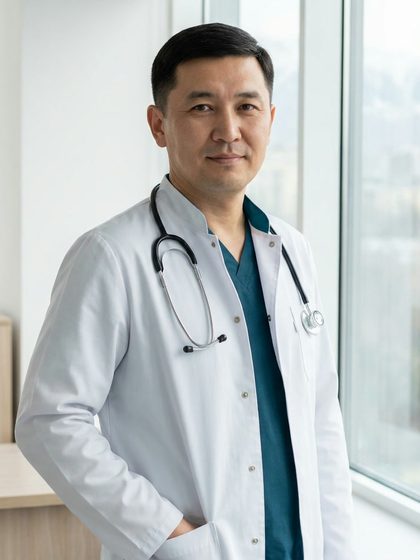
Reviewed byRinat Zhumabekov, MDAddiction psychiatrist, experience 21 years · updated 8 Nov 2026
Key facts
- ICD-10 code
- F12.2
- Who provides care
- An addiction doctor (narcologist) from the mobile team, followed by the clinic’s psychotherapist or psychologist
- Where
- At home in Almaty and its suburbs, in the inpatient unit, or online for family members
- Duration
- Home visit — 1–2 hours; acute withdrawal — about 7–14 days; follow-up support — from 3 months
- Anonymity
- Medical confidentiality; paid anonymous treatment with no entry in the state dispensary registry
- When it is urgent
- Psychosis, seizures, chest pain, confusion, or suicidal thoughts — call 103 or 112
- Outcome
- Relief of acute withdrawal symptoms, a treatment plan, and work on the reasons behind drug use
What you should know
Told by the on-call doctor of our mobile team. Most of our cannabis-related calls come on Friday evenings or at night after holidays. It is rarely the person themselves who calls — it is a mother or a wife: “He hasn’t slept for three days, he keeps pacing around the apartment and says someone is watching him.” The dispatcher will ask the person’s age, what exactly they used — “weed” or a smoking blend — when they last used, and whether there is aggression, seizures, or suicidal thoughts. The answers determine whether I come alone or recommend inpatient care right away.
Travel time across the city varies: at night it takes us about twenty to thirty minutes to reach the Bostandyk district, in evening traffic on Al-Farabi Avenue up to an hour, and longer to the Alatau or Nauryzbay districts or to Kaskelen. While I am on my way, the dispatcher stays on the line with the family and tells them what to do: remove sharp objects, avoid arguing, and do not lock the person in. With spice, honesty matters: synthetic cannabinoids are far more toxic than plant cannabis, and reactions to them can be unpredictable, so if there is confusion or seizures, I ask families not to wait for me but to call 103.
Warning Signs That Bring Families to Us
- using almost every day, even though the person promised to use “only on weekends”
- irritability, insomnia, and loss of appetite during the first days without marijuana
- declining interest in studies, work, sports, and old friends
- bouts of anxiety, suspiciousness, a feeling of being watched
- red eyes, slowed speech, memory gaps for recent events
- debts, money and belongings disappearing from home, lying about where they spent their time
- attempts to quit that end after a few days
If two or three points apply, it is worth seeing a doctor. Phone advice is free and confidential. If life is at risk, call 103 or 112.
Why Marijuana and Spice Are Addictive
The active compounds in cannabis act on the brain’s endocannabinoid system, which regulates mood, sleep, appetite, and the stress response. With regular use, the brain adapts, and without the drug the person feels anxious, bored, and unable to sleep. The risk is higher in teenagers and young adults because their brains are still maturing. A common story in our practice: a student who started smoking “to fit in” in the dorm and a year later can no longer fall asleep without a joint.
Synthetic cannabinoids, or spice, pose a separate danger. They are chemicals of unpredictable composition that bind to receptors more strongly than plant cannabis. As a result, acute psychosis, seizures, heart rhythm disturbances, and severe poisoning are more common. Dependence is further sustained by depression, anxiety disorders, ADHD, family conflicts, and a social circle in which drug use is seen as normal.
How a Home Visit Works: From the Call to the Next Morning
The call — the dispatcher takes the history and passes it on to me. On arrival, I measure blood pressure, pulse, and oxygen saturation, check the neurological status, and ask what was used and how much. If anxiety and insomnia are severe, I prescribe symptomatic treatment and, if needed, start an IV drip. After an hour or an hour and a half, once the person is calmer, we discuss the plan: observation at home, a call from the doctor the next day, and a meeting with a psychotherapist in 2–3 days.
We do not treat at home acute psychosis, seizures, marked confusion, aggression that threatens others, chest pain, or severe spice poisoning — these require an ambulance (103 or 112) and hospital care. We also recommend inpatient treatment if there are suicidal thoughts, serious coexisting illnesses, or no one at home to look after the person. Treatment against a person’s will is possible only by court order; the clinic never takes anyone by force.
How we help
Withdrawal management
Cannabis withdrawal is rarely life-threatening, but it is hard to endure: irritability, insomnia, anxiety, sweating, and cravings. The doctor selects symptomatic therapy and, if needed, detox solutions and B vitamins; sedatives are prescribed only when clinically indicated and under supervision. Acute symptoms usually ease within 1–2 weeks, while sleep takes longer to recover.
Motivational interviewing
Many patients with this type of addiction are convinced that “weed is harmless.” The psychotherapist does not argue or shame, but helps the person see for themselves what drug use is costing them: studies, money, relationships, anxiety. The method is recommended by international guidelines and works well with young people who come to the doctor at their parents’ insistence.
Cognitive behavioral therapy
The patient learns to recognize the situations, thoughts, and feelings that trigger cravings and to replace drug use with other actions. Sessions practice saying no in company, managing boredom and stress, and restoring a healthy sleep routine. A course usually takes 8–16 sessions, some of which can be held online if the person lives far away, for example in Talgar or Konaev.
Treatment of co-occurring disorders
If depression, an anxiety disorder, ADHD, or signs of psychosis are identified alongside drug use, a psychiatrist joins the care team. Without this, the risk of relapse is high: the person goes back to “treating” anxiety with weed. Psychiatric care at Narcology 24 is provided anonymously, and medication is prescribed by a doctor only after an in-person examination.
Myths and facts
MythMarijuana is not addictive
FactIt is. Cannabis use disorder is described in both ICD-10 and ICD-11. Some regular users develop cravings, increasing tolerance, and withdrawal symptoms, especially if they started using in adolescence.
MythSpice is just “synthetic weed”
FactSynthetic cannabinoids are different chemicals with unpredictable composition and potency. They are the cause of the severe psychoses, seizures, and poisonings we are called out for at night, which often require an ambulance and intensive care.
MythIf you quit, everything will go away on its own in a couple of days
FactAcute withdrawal symptoms do gradually subside, but anxiety, insomnia, and cravings can persist for weeks. Without addressing the reasons for drug use, relapses are common, which is why psychotherapy and follow-up support are so important.
How a home visit works
- Call or message usThe dispatcher answers 24/7 and in 3–5 minutes checks the person's condition, age, how long the drinking or use has lasted, chronic conditions and the address. No surname needed.
- The doctor sets offAn addiction doctor or psychiatrist comes with equipment and medication. Travel time depends on the district — usually within an hour. If inpatient care or an ambulance is needed, we'll say so straight away.
- Examination and treatmentBlood pressure, pulse, oxygen saturation, blood sugar if needed and a neurological check. Then an IV drip or other treatment as indicated, 1–3 hours.
- A plan for the next daysAdvice for the family on what to do overnight and tomorrow, phone follow-up and a repeat visit if needed.
- Further treatmentCoding, psychotherapy, rehab or psychiatric follow-up — once the acute state has passed and the person is ready.
Prices in Almaty
| Initial addiction doctor consultation | 12 000 ₸ |
| Inpatient detox (per day) | 35 000 ₸ |
| Psychotherapy course (8 sessions) | 96 000 ₸ |
| Phone advice | free |
The final cost is agreed before treatment starts. Prices are in tenge and do not constitute a public offer.
Where to get help
In almaty you can get help at home, at one of our two branches (84 Zhandosova St., Almaty, 21 Seyfullina Ave., office 11, Almaty) or online if you need a consultation rather than a procedure. The dispatcher answers 24/7 and will tell you straight away which option is safest.
Confidential and private
Information about your request, diagnosis and treatment is protected by medical confidentiality under the Code of the Republic of Kazakhstan “On Public Health and the Healthcare System”. We do not share it with employers, schools, the police or neighbours; the only exceptions are those expressly set by law. A first name is enough to call us, and paid confidential treatment does not mean a registry entry.
Questions and answers
Can we call a doctor if the person is against it?
The doctor can come and talk with the family and with the person, but treatment is provided only with their consent. A conversation with a doctor who does not lecture often helps the person make the decision. If there is a threat to life or psychosis with aggression, call 103 or 112. Treatment without consent is possible only by court order.
How long does treatment for cannabis dependence take?
The acute withdrawal period usually lasts 1–2 weeks. The main work is psychotherapy, which takes 3 months or more. The timeline depends on how long the person has been using, their age, co-occurring disorders, and family support; the doctor proposes an exact plan after the examination.
Will my university or employer find out?
No. We maintain medical confidentiality under the Code of the Republic of Kazakhstan “On Public Health and the Healthcare System.” Treatment is provided anonymously on a paid basis, with no entry in the state dispensary registry. Information is disclosed only in cases expressly provided for by law.
What should we do if the person has lost consciousness after using spice?
Call 103 or 112 immediately. Lay the person on their side so they do not choke if they vomit, do not leave them alone, do not give them anything to drink, and do not try to “bring them round” with cold water. In this situation, you must not wait for the mobile addiction doctor.
Can we start with an online consultation?
Yes. Over video, the doctor carries out an initial assessment, answers family members’ questions, and helps prepare for the conversation with your loved one. However, an examination, blood pressure and pulse measurement, and prescribing medication require an in-person visit. Online sessions are convenient for follow-up meetings with a psychotherapist.
Do you make visits at night and on holidays?
Yes, our mobile team works 24/7, including New Year’s and Nauryz. There are more calls on holiday nights, so it is best to call as soon as you feel worried rather than wait until morning. Arrival time depends on the district and traffic; the dispatcher will tell you when you call.
Where do doctors visit in Almaty and where are the branches?
Home visits cover all city districts and nearby settlements, 24/7. Appointments at two branches: 84 Zhandosova St., Almaty and 21 Seyfullina Ave., office 11, Almaty. Phone in Almaty: +7 (700) 309-29-88.
Sources and methodology
This page was prepared by the Narcology 24 medical editorial team based on:
- International Classification of Diseases ICD-10 and ICD-11, World Health Organization
- Clinical diagnosis and treatment protocols of the Ministry of Health of the Republic of Kazakhstan
- Code of the Republic of Kazakhstan “On Public Health and the Healthcare System”
- NICE (UK) guidelines on alcohol and drug misuse and mental health conditions
- WHO recommendations on the treatment of substance use disorders
This information is for reference only and does not replace a consultation with a specialist. Editorial policy