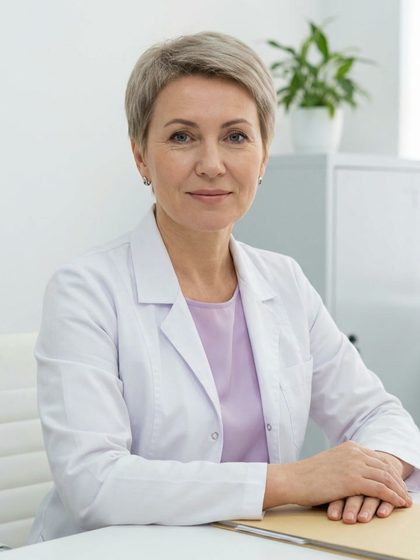
Reviewed byOlga Smirnova, MDAddiction psychiatrist, experience 27 years · updated 8 Nov 2026
Key facts
- Who provides care
- A psychiatrist and an addiction doctor together, with a psychotherapist involved
- Where
- Home visits in Almaty and the suburbs, inpatient unit, online follow-up
- Duration
- Detox 3–7 days, main treatment from several months
- Anonymity
- No entry in the state addiction or psychiatric registry
- When it’s urgent
- Delirium tremens, seizures, overdose, suicidal thoughts — call 103 or 112
- Outcome
- Lasting sobriety and control of mental health symptoms
What you should know
On night calls, we see dual diagnosis all the time, even though relatives have never heard the term. They call about a drinking binge, and in the apartment I find a person who drinks because otherwise anxiety won’t let them sleep. Or we are called to a son who is “acting strangely,” and it turns out he has also been using stimulants. In such cases, the dispatcher always asks about substances and about previous diagnoses — this determines who goes: an addiction doctor, a psychiatrist, or both.
The main difficulty is that one problem masks the other. Alcohol relieves anxiety and low mood for a while and then makes them three times worse. Hangover depression looks like the real thing, and withdrawal insomnia looks like a symptom of psychosis. That is why I don’t make final diagnoses in the first 24 hours: first comes safe detox, sleep, and observation. Only after one or two weeks of sobriety does it become clear what remains once the substance has left the body, and what treatment is really needed.
Signs that a mental disorder lies behind the addiction
- the person drinks or uses to dull low mood, anxiety, or insomnia
- after coming off a binge, depression and thoughts that life is meaningless last for weeks
- periods of “manic energy” alternate with binges and complete exhaustion
- voices, suspiciousness, or fear of being followed appear during substance use
- relapses happen after traumatic events, nightmares, or memories
- the person has been treated for addiction before, but each time it ended in a quick relapse
- there are relatives in the family with depression, bipolar disorder, schizophrenia, or addiction
If two or three points apply, it is worth seeing a doctor. Phone advice is free and confidential. If life is at risk, call 103 or 112.
Why addiction and mental disorders go hand in hand
The link works both ways. A person with unrecognized depression, anxiety, or PTSD finds quick relief in alcohol and gradually becomes dependent. This is called self-medication, and it almost always ends worse than it began. On the other hand, substances themselves change how the brain works: long-term heavy drinking and stimulants trigger depression, anxiety, and psychotic episodes, especially in people with a hereditary predisposition.
The shared risk factors are the same, too: severe stress, childhood trauma, chronic loneliness, and family history. International guidelines, including those from NICE and the WHO, recommend treating both disorders at the same time by one team. If only the addiction is treated, untreated depression pushes the person toward relapse. If only the depression is treated, alcohol cancels out the effect of the medication and raises the risk of suicide.
How care works: from the first call to long-term support
It usually starts with a home visit. The team arrives, the psychiatrist and the addiction doctor assess the person’s condition, and if needed, an IV drip is set up to relieve intoxication and withdrawal. If the person lives in the Nauryzbay or Alatau district and hospitalization is needed, transport is arranged the same night. The next 3–7 days are detox and observation. After that, the psychiatrist carries out a full assessment and selects treatment, and a psychotherapist joins in. Then comes follow-up support in person and online.
Treatment at home is not possible in cases of delirium tremens, seizures, severe confusion, overdose, a high risk of suicide, or pronounced psychosis, or if the person has already relapsed several times during home treatment. Then inpatient care is needed. If there is a threat to life, call 103 or 112 without waiting for a private team. The doctor explains the decision to the family.
How we help
Safe detox
The first stage is to clear the substance from the body and relieve withdrawal under a doctor’s supervision. Detox solutions, B vitamins, liver-protecting medications, and medications for sleep and anxiety are used, strictly as prescribed after an examination. Importantly, detox in dual diagnosis takes mental health symptoms into account: the approach for someone with a history of bipolar disorder or psychosis differs from standard binge withdrawal treatment.
Diagnosis after a period of sobriety
After one or two weeks of sobriety, the psychiatrist reassesses the person. Some withdrawal-related symptoms go away, and what remains is the underlying mental disorder. A diagnosis is made according to ICD-10 and discussed with the patient and family. This takes time, but it is this step that determines whether further treatment will be correct and whether it will help.
Integrated treatment
Medications are chosen to treat the mental disorder — antidepressants, mood stabilizers, or antipsychotics, depending on the diagnosis — taking into account the risk of interaction with alcohol and the load on the liver. At the same time, relapse prevention therapy for the addiction is carried out. Alcohol “coding” (a treatment widely used in Kazakhstan and CIS countries) or an opioid blockade is possible only after an examination, the required period of sobriety, and written consent, as part of the overall plan.
Psychotherapy and family work
The Narcology 24 psychotherapist works on the reasons for substance use, skills for coping with anxiety and low mood without the substance, and relapse prevention. Cognitive behavioral therapy and motivational interviewing are used. Separate sessions are held with the family: how to support without control and arguments, how to recognize the start of a relapse, and what to do if it does happen.
Myths and facts
MythOnce they stop drinking, the depression will go away by itself
FactSometimes that happens, if the low mood was caused by alcohol. But if the depression existed before the addiction, it won’t go anywhere and, without treatment, will become the main cause of relapse. Only a psychiatrist can tell the difference after a period of sobriety.
MythAntidepressants just replace one addiction with another
FactAntidepressants and mood stabilizers are not habit-forming in the way alcohol or drugs are. Medications that can cause dependence are prescribed for short periods and under a doctor’s supervision.
MythYou have to cure the addiction first and then treat the mind
FactA step-by-step approach often fails: an untreated mental disorder drives the person back to using. International guidelines recommend treating both conditions at the same time, by one team.
How a home visit works
- Call or message usThe dispatcher answers 24/7 and in 3–5 minutes checks the person's condition, age, how long the drinking or use has lasted, chronic conditions and the address. No surname needed.
- The doctor sets offAn addiction doctor or psychiatrist comes with equipment and medication. Travel time depends on the district — usually within an hour. If inpatient care or an ambulance is needed, we'll say so straight away.
- Examination and treatmentBlood pressure, pulse, oxygen saturation, blood sugar if needed and a neurological check. Then an IV drip or other treatment as indicated, 1–3 hours.
- A plan for the next daysAdvice for the family on what to do overnight and tomorrow, phone follow-up and a repeat visit if needed.
- Further treatmentCoding, psychotherapy, rehab or psychiatric follow-up — once the acute state has passed and the person is ready.
Prices in Almaty
| Online psychiatrist consultation | 15 000 ₸ |
| In-person psychiatrist consultation | 18 000 ₸ |
| Psychiatrist home visit | 40 000 ₸ |
| Phone advice | free |
The final cost is agreed before treatment starts. Prices are in tenge and do not constitute a public offer.
Where to get help
“Dual diagnosis: addiction and mental illness” in Almaty is available 24/7, including weekends. Home visits: all city districts and nearby settlements. For appointments, Narcology 24 has two branches: 84 Zhandosova St., Almaty and 21 Seyfullina Ave., office 11, Almaty. If you live elsewhere in Almaty and Almaty Region, call us and we'll advise the fastest way to get help.
Confidential and private
in Almaty our doctor can come in ordinary clothes in an unmarked car. Treatment documents are given only to the patient. If you need a certificate or sick note, this is discussed separately and only at your request.
Questions and answers
How can I tell if a loved one has a dual diagnosis?
You can’t tell for sure on your own. There is reason to suspect it if the person drinks or uses to cope with low mood, fear, or insomnia, or if mental health symptoms last for weeks after coming off a binge. A psychiatrist can sort it out definitively after a period of sobriety.
How long does treatment take?
The acute stage, with detox and selection of treatment, takes from one to four weeks. It is followed by outpatient treatment and support over several months, often a year or more. Dual diagnosis requires long-term work, but the results are also more lasting.
Can treatment be done at home instead of in a hospital?
Yes, if the person’s condition is stable, there is no psychosis, high suicide risk, or severe withdrawal, and the family is ready to provide support. The doctor visits the home and monitors the patient, and follow-up is done online. If things get worse or there is a relapse, treatment moves to the inpatient unit.
What if the person refuses to admit there is a problem?
This is a common situation. Start with a consultation for relatives: the doctor will help you plan the conversation and suggest which arguments work. Treatment can be compelled only by court decision under the procedure provided for by the law of the Republic of Kazakhstan; the clinic does not take anyone by force.
Will the person be registered with an addiction specialist and a psychiatrist?
No. Treatment at Narcology 24 is provided on a paid, anonymous basis without registration with the state dispensary. Information about treatment is protected by medical confidentiality and is disclosed only in cases explicitly provided for by the law of the Republic of Kazakhstan. The employer will not find out about the treatment.
What should we do if a relapse happens during treatment?
Don’t stop treatment, and tell the doctor right away. With dual diagnosis, a relapse is a common part of the journey, not a failure. The doctor will assess the person’s condition, make a home visit or suggest a short hospital stay if needed, and adjust the treatment. If there is a threat to life, call 103.
Where do doctors visit in Almaty and where are the branches?
Home visits cover all city districts and nearby settlements, 24/7. Appointments at two branches: 84 Zhandosova St., Almaty and 21 Seyfullina Ave., office 11, Almaty. Phone in Almaty: +7 (700) 309-29-88.
Sources and methodology
This page was prepared by the Narcology 24 medical editorial team based on:
- International Classification of Diseases ICD-10 and ICD-11, World Health Organization
- Clinical diagnosis and treatment protocols of the Ministry of Health of the Republic of Kazakhstan
- Code of the Republic of Kazakhstan “On Public Health and the Healthcare System”
- NICE (UK) guidelines on alcohol and drug misuse and mental health conditions
- WHO recommendations on the treatment of substance use disorders
This information is for reference only and does not replace a consultation with a specialist. Editorial policy