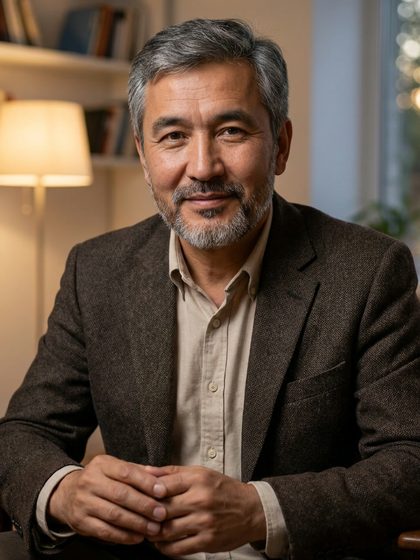
Reviewed byArman Magzhanov, MDPsychiatrist, experience 24 years · updated 8 Nov 2026
Key facts
- Who provides care
- A psychiatrist from the mobile team, with a nurse if needed
- Where
- At the patient’s home in any district of Almaty and in the suburbs
- Duration
- 1–2 hours on site, plus travel time
- Anonymity
- Medical confidentiality, no entry in the state psychoneurological dispensary registry
- When it’s urgent
- Aggression with a weapon, a suicide attempt, seizures — call 103 or 112
- Outcome
- Assessment of the person’s condition, help on the spot, a treatment plan or hospitalization
What you should know
A typical call looks like this. Around midnight, a son calls: since his mother died, his father barely eats, doesn’t sleep, and says there is no point in living. The dispatcher checks the essentials — whether the person is trying to harm themselves right now, whether there are weapons or medications within reach, and whether they have been drinking. If there is no immediate threat, the team heads out. At night we get from the Medeu district to the Turksib district faster; during the day the time depends on traffic, and the dispatcher gives a realistic estimate right away.
In the apartment, the first thing I do is introduce myself and sit next to the person, not across from them. Many patients are wary: a stranger, and a psychiatrist at that. I explain who I am and why I came, that this is not involuntary hospitalization but a conversation. I ask relatives to stay in the next room but nearby. Then comes the conversation, the examination, checking blood pressure and pulse, and questions about sleep, thoughts, and medications. Only after that does it become clear what to do next.
When you need a psychiatrist at home rather than a video call
- the person refuses to leave the house but agrees to talk to a doctor
- behavior has changed sharply: suspiciousness, fears, strange statements
- an elderly relative has become confused, doesn’t recognize family members, or wanders at night
- anxiety, insomnia, or fears have appeared after a drinking binge or stopping medications
- the person says they don’t want to live but is willing to talk
- you need to know whether hospitalization is required, but the person refuses to go to a clinic
- a known illness has flared up, and adjusting treatment helped in the past
If two or three points apply, it is worth seeing a doctor. Phone advice is free and confidential. If life is at risk, call 103 or 112.
Why families call a psychiatrist to the home
The main reason is that the person won’t go on their own. With depression, there is no energy even to get dressed; with anxiety, leaving the apartment triggers panic; with psychosis, the patient doesn’t believe they are ill. The family spends weeks trying to persuade them while the condition gets worse. The second reason is older people: age-related confusion, dementia, fears at night. Taking such a person across the city, from upper Almaty to the lower part, is hard both for them and for the family.
The third reason is anonymity. A marked vehicle at the entrance, a line at the dispensary, acquaintances — for many people this is an insurmountable barrier. The Narcology 24 mobile team arrives in an unmarked car, the doctor wears ordinary clothes, and the neighbors won’t know about the visit. The fourth is timing: at night and on holidays, outpatient offices are closed, but the condition can’t wait, so calls come at the hardest hours.
How a home visit works: from the call until morning
The dispatcher takes the call and asks about safety and the person’s condition. If relatives aren’t sure a visit is needed, the on-call psychiatrist first connects by video. While the team is on its way, get documents and discharge summaries and a list of medications ready, and put sharp objects and medications out of reach. On site, the doctor talks with the patient and then with the family, performs an examination, and, if needed, gives an injection or sets up an IV drip. Before leaving, the doctor explains the plan for the night and the morning and arranges the next contact.
Help at home is not possible if the person is armed, aggressive, and dangerous to others, has already attempted suicide, or is confused with a high fever or seizures. In these cases, call 103 or 112 right away, and the police if necessary. Involuntary hospitalization is possible only under the procedure established by the law of the Republic of Kazakhstan; the clinic’s team does not take anyone away by force.
How we help
Psychiatric examination
A conversation with the patient and relatives, and an assessment of consciousness, thinking, perception, mood, and insight. The doctor finds out the history of the illness, current medications, and alcohol and substance use. They measure blood pressure and pulse and assess general health so as not to miss a physical cause of the behavior changes. It takes time, but it can’t be skipped.
Help on the spot
For severe anxiety, agitation, or insomnia, the doctor can start treatment on site: an injection or an IV drip with medications chosen after the examination. The goal is to relieve the acute state, let the person get some sleep, and get safely through to morning. Medications are selected individually, taking other illnesses into account.
Home treatment plan
If the person’s condition allows treatment at home, the doctor draws up a plan: what to take, how to keep track of sleep and behavior, and what the family should watch for. A follow-up visit or video consultation is scheduled in 1–3 days. Relatives get the number of the on-call line for emergencies. If things get worse during the night, the on-call doctor will advise what to do and come again if necessary.
Arranging hospitalization
If it isn’t safe at home or treatment requires observation, the doctor explains to the patient and family why hospitalization is needed and helps arrange it: at the Narcology 24 inpatient unit or at a specialized facility. If the patient voluntarily agrees, transport is arranged right away, without waiting until morning. The doctor passes their notes on to colleagues at the hospital so treatment continues without a gap.
Myths and facts
MythA psychiatrist comes to the home to take the person to a hospital
FactThe purpose of the visit is examination and help. Most calls end with treatment at home. Hospitalization is offered only when it isn’t safe at home, and it happens either voluntarily or by court decision.
MythAfter a psychiatrist’s visit, the person will be put on a registry
FactPaid anonymous care does not mean registration with the state dispensary. The information is protected by medical confidentiality and is disclosed only in cases explicitly provided for by the law of the Republic of Kazakhstan. Employers and neighbors won’t learn about the visit; the team arrives in an unmarked car.
MythYou only need to call a psychiatrist when someone is violent
FactMore often, the team goes to quiet patients: depression, refusing food, insomnia, older people with nighttime confusion. Seeking help early helps avoid a severe relapse. Don’t wait until things get really bad: a call at the start of a decline is almost always easier for both the patient and the family.
How a home visit works
- Call or message usThe dispatcher answers 24/7 and in 3–5 minutes checks the person's condition, age, how long the drinking or use has lasted, chronic conditions and the address. No surname needed.
- The doctor sets offAn addiction doctor or psychiatrist comes with equipment and medication. Travel time depends on the district — usually within an hour. If inpatient care or an ambulance is needed, we'll say so straight away.
- Examination and treatmentBlood pressure, pulse, oxygen saturation, blood sugar if needed and a neurological check. Then an IV drip or other treatment as indicated, 1–3 hours.
- A plan for the next daysAdvice for the family on what to do overnight and tomorrow, phone follow-up and a repeat visit if needed.
- Further treatmentCoding, psychotherapy, rehab or psychiatric follow-up — once the acute state has passed and the person is ready.
Prices in Almaty
| Online psychiatrist consultation | 15 000 ₸ |
| In-person psychiatrist consultation | 18 000 ₸ |
| Psychiatrist home visit | 40 000 ₸ |
| Phone advice | free |
The final cost is agreed before treatment starts. Prices are in tenge and do not constitute a public offer.
Where to get help
In almaty you can get help at home, at one of our two branches (84 Zhandosova St., Almaty, 21 Seyfullina Ave., office 11, Almaty) or online if you need a consultation rather than a procedure. The dispatcher answers 24/7 and will tell you straight away which option is safest.
Confidential and private
in Almaty our doctor can come in ordinary clothes in an unmarked car. Treatment documents are given only to the patient. If you need a certificate or sick note, this is discussed separately and only at your request.
Questions and answers
How quickly will the psychiatrist arrive?
It depends on the district and traffic. At night, the team reaches most districts of Almaty in 40–60 minutes; during daytime rush hour, the drive to the Alatau or Nauryzbay district or the suburbs can take longer. The dispatcher will give you a realistic time right away.
What if the person doesn’t want to talk to a doctor?
Don’t hide that a doctor is coming, but don’t threaten them with the hospital either. Say that you are worried and would like a specialist simply to talk with them. An experienced psychiatrist knows how to build rapport even with a wary patient. If the person is dangerous, call 103 or 112.
Can I call a psychiatrist for an elderly relative?
Yes, it is one of the most common reasons for a call. The doctor will assess memory, orientation, sleep, and behavior and check for medications that can cause confusion. If needed, they will recommend tests with a neurologist and a general practitioner. If the confusion came on suddenly, over hours or a day, call 103 right away: it may be a sign of a stroke or an infection.
Will the team come at night or on a public holiday?
Yes, home visits are available around the clock, seven days a week, including Nauryz and the New Year holidays. It is at night and on holidays that requests increase, so the on-call team works at full strength. Night calls carry no holiday surcharge; the dispatcher will tell you the terms in advance.
Do you travel outside the city?
Yes, the team travels to Kaskelen, Talgar, Konaev, Otegen Batyr, and other suburbs. The dispatcher will tell you the cost and travel time when you call. If the distance is long and the situation is urgent, a video consultation is held first. If there is a threat to life, don’t wait for our team — call 103.
Do I need to prepare anything before the doctor arrives?
Documents and discharge summaries from previous treatment, packaging of the medications the person takes, and information on chronic illnesses and allergies. Put sharp objects, medications, and alcohol out of reach. Meet the team at the building entrance or describe in detail how to find the apartment.
Where do doctors visit in Almaty and where are the branches?
Home visits cover all city districts and nearby settlements, 24/7. Appointments at two branches: 84 Zhandosova St., Almaty and 21 Seyfullina Ave., office 11, Almaty. Phone in Almaty: +7 (700) 309-29-88.
Sources and methodology
This page was prepared by the Narcology 24 medical editorial team based on:
- International Classification of Diseases ICD-10 and ICD-11, World Health Organization
- Clinical diagnosis and treatment protocols of the Ministry of Health of the Republic of Kazakhstan
- Code of the Republic of Kazakhstan “On Public Health and the Healthcare System”
- NICE (UK) guidelines on alcohol and drug misuse and mental health conditions
- WHO recommendations on the treatment of substance use disorders
This information is for reference only and does not replace a consultation with a specialist. Editorial policy