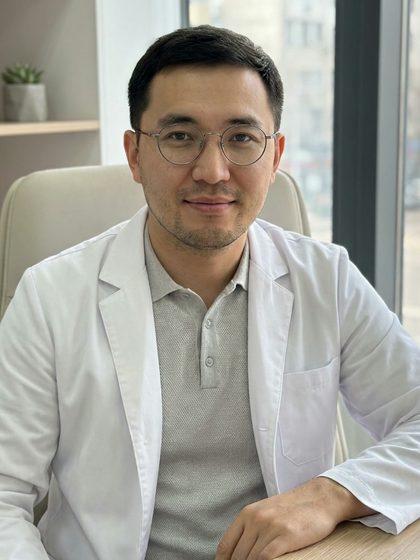
Reviewed byNurlan Isayev, MDAddiction psychiatrist, experience 10 years · updated 8 Nov 2026
Key facts
- ICD-10 code
- F11–F19
- Who provides it
- Addiction medicine doctors (narcologists), a psychiatrist, a psychotherapist and the inpatient unit’s medical staff
- Where
- Mainly in the inpatient unit; initial care at home, follow-up on an outpatient basis and online
- Duration
- Detox usually takes 5–14 days; rehab and ongoing support last from several months
- Anonymity
- No surname needed if you prefer, no state dispensary registry, full medical confidentiality
- When it’s urgent
- Overdose, loss of consciousness, seizures, psychosis, chest pain — call 103 or 112
- Outcome
- Safe withdrawal, mental stabilization, and a program for remission and relapse prevention
What you should know
Night calls about drugs are different from calls about alcohol. A father calls: his son hasn’t slept for three days, he is pacing the apartment, checking the locks and saying someone is following him. Or a mother: her daughter is lying in bed in the throes of withdrawal, begging for money “one last time.” The first thing the dispatcher will ask is whether the person is breathing normally, whether they are conscious, and whether there are seizures, chest pain or aggression. If any of these are present, call 103 or 112 right away, and we will follow up.
If there is no danger to life, I come out, examine the person and assess which substance has been used and for how long. Everything depends on this: withdrawal from opioids, stimulants and synthetic drugs runs a different course. Most often, after initial care, I suggest an inpatient stay, because at home, with drug dependence, the temptation and the risk of overdose are too great. From Turksib district or from Konaev, we transport the patient ourselves, discreetly.
Signs of Drug Addiction
- a strong craving for the substance and an inability to control use
- increasing the dose or how often the drug is used to get the same effect
- withdrawal: aches, chills, insomnia, anxiety and depression after stopping
- a new circle of friends, secrecy, lying, money and valuables going missing
- sudden mood swings, suspiciousness, aggression, apathy
- loss of interest in work, studies, family, friends and appearance
- continued use despite illness, debts and trouble with the law
If two or three points apply, it is worth seeing a doctor. Phone advice is free and confidential. If life is at risk, call 103 or 112.
How Drug Addiction Develops
Psychoactive substances act directly on the brain’s reward system, triggering a release of dopamine many times greater than natural levels. The brain quickly adapts: ordinary pleasures stop bringing enjoyment, and without the substance severe physical and psychological symptoms appear. How quickly dependence develops depends on the substance: with opioids and synthetic stimulants, it can develop very fast.
Risk factors include a genetic predisposition, an early age of first use, traumatic experiences, depression, anxiety, attention deficit hyperactivity disorder (ADHD), the availability of substances and one’s social environment. In ICD-10, dependence on different substances is coded in sections F11–F19, and in ICD-11 in block 6C4. Recognizing addiction as a brain disease rather than a moral failing underpins the current guidelines of the World Health Organization (WHO).
How Drug Addiction Treatment Works: From the Call to Rehab
After you call, the dispatcher assesses how urgent the situation is and offers a home visit or a video consultation. On site, the doctor examines the person, sets up an IV drip if needed and discusses hospital admission. In the inpatient unit, detox is carried out with round-the-clock monitoring, along with a medical workup and a psychiatrist’s consultation. After the acute phase, psychotherapy, medication support and rehab begin, and the family receives counseling on how to support remission.
Home treatment for drug addiction is limited: the risks of overdose after withdrawal, psychosis, suicide and severe withdrawal are high. In the event of loss of consciousness, slow breathing, seizures, psychosis or chest pain, call 103 or 112 immediately. Treatment is voluntary only; involuntary treatment is possible only by court decision under the procedure established by the law of the Republic of Kazakhstan. The clinic does not “take people by force.”
How we help
Inpatient detox
Withdrawal from the substance takes place under round-the-clock supervision. Detoxification IV solutions, symptomatic treatment of pain, insomnia and anxiety, and correction of electrolytes are used. Medications are chosen individually depending on the substance: opioids, stimulants and synthetic cathinones each require a different approach. Benzodiazepines and other sedatives are used only when prescribed by a doctor.
Medication support for remission
In opioid dependence, opioid receptor antagonists may be used after complete detox — an opioid blockade that blocks the effect of opioids. With other substances, co-occurring conditions are treated: depression, anxiety and insomnia. Any medication support is given only after a medical workup and written informed consent.
Psychotherapy and dual diagnosis
The psychotherapist works on motivation, triggers, refusal skills and emotional regulation. Cognitive behavioral therapy, motivational interviewing and group sessions are used. If there is a mental health disorder — depression, psychosis, post-traumatic stress disorder (PTSD) — the Narcology 24 psychiatrist treats it at the same time; otherwise, the risk of relapse remains high.
Rehab and social reintegration
Rehab helps restore a daily routine, the skills for living without the substance, relationships, and work or studies. It can take place in an inpatient program or on an outpatient basis — for example, for people living in Kaskelen or the upper part of the city, with some of the sessions held by video. Working with the family and a gradual return to the usual environment, with an action plan for cravings, are important. Regular sessions with a doctor and a psychotherapist, in person or online, help sustain remission.
Myths and facts
MythDrug addiction can’t be cured, so treatment is pointless
FactAddiction is a chronic illness, but as with other chronic diseases, long-term, stable remission is possible with the right treatment. Many people live for years and decades without using.
MythIt’s enough to tough out withdrawal at home, and it will all pass
FactGoing through withdrawal alone is dangerous: severe withdrawal, psychosis and seizures are possible, and afterward tolerance drops, so the risk of a fatal overdose rises sharply in the event of a relapse. It is safer to go through withdrawal under supervision.
MythThe main thing is to isolate the person, and they’ll get better
FactIsolation without treatment doesn’t change the brain or a person’s skills. Without psychotherapy, medical care, work with the family and preparation for life outside the clinic, a relapse after leaving is very likely, especially in the first few weeks.
How a home visit works
- Call or message usThe dispatcher answers 24/7 and in 3–5 minutes checks the person's condition, age, how long the drinking or use has lasted, chronic conditions and the address. No surname needed.
- The doctor sets offAn addiction doctor or psychiatrist comes with equipment and medication. Travel time depends on the district — usually within an hour. If inpatient care or an ambulance is needed, we'll say so straight away.
- Examination and treatmentBlood pressure, pulse, oxygen saturation, blood sugar if needed and a neurological check. Then an IV drip or other treatment as indicated, 1–3 hours.
- A plan for the next daysAdvice for the family on what to do overnight and tomorrow, phone follow-up and a repeat visit if needed.
- Further treatmentCoding, psychotherapy, rehab or psychiatric follow-up — once the acute state has passed and the person is ready.
Prices in Almaty
| Initial addiction doctor consultation | 12 000 ₸ |
| Inpatient detox (per day) | 35 000 ₸ |
| Psychotherapy course (8 sessions) | 96 000 ₸ |
| Phone advice | free |
The final cost is agreed before treatment starts. Prices are in tenge and do not constitute a public offer.
Where to get help
Narcology 24 in Almaty: our duty team makes home visits day and night, usually within an hour (all city districts and nearby settlements). Two branches for appointments and procedures — 84 Zhandosova St., Almaty and 21 Seyfullina Ave., office 11, Almaty. When indicated, we arrange admission and transport.
Confidential and private
Information about your request, diagnosis and treatment is protected by medical confidentiality under the Code of the Republic of Kazakhstan “On Public Health and the Healthcare System”. We do not share it with employers, schools, the police or neighbours; the only exceptions are those expressly set by law. A first name is enough to call us, and paid confidential treatment does not mean a registry entry.
Questions and answers
Can drug addiction be treated anonymously?
Yes. Treatment at the clinic is provided on a paid, anonymous basis, without placement on the state dispensary registry. You don’t have to give your surname. Medical confidentiality is protected by the Code of the Republic of Kazakhstan “On Public Health and the Healthcare System.” Exceptions are possible only in cases provided for by law, for example at the request of a court.
How long does drug addiction treatment take?
Detox usually takes 5 to 14 days, depending on the substance and the person’s condition. It is followed by rehab and maintenance treatment, which last from several months to a year or longer. The timeline is set by the doctor after a medical workup and may change over the course of treatment.
What should I do if I suspect an overdose?
Call 103 or 112 immediately. If the person is unconscious but breathing, lay them on their side and watch their breathing. If breathing stops, start cardiopulmonary resuscitation (CPR) following the dispatcher’s instructions. Don’t leave the person alone until the ambulance arrives.
Can drug addiction be treated at home?
Initial care — an examination, an IV drip, a consultation — can be provided at home. But detox for drug dependence is usually safer in the inpatient unit: there is round-the-clock monitoring, no access to the substance and a lower risk of complications. The doctor makes the decision.
How can I persuade a loved one to get treatment?
Don’t start the conversation when they are intoxicated or right after a fight. Talk about facts and your own feelings, and offer specific help. A consultation for relatives helps: the doctor will advise you on how to structure the conversation and what steps to take if the person refuses.
Will the clinic report me to the police?
No. The clinic does not share information about patients with the police, except in cases expressly provided for by law, such as an official request from a court or investigators. Seeking treatment is taking care of your health, and doctors keep medical confidentiality.
Where do doctors visit in Almaty and where are the branches?
Home visits cover all city districts and nearby settlements, 24/7. Appointments at two branches: 84 Zhandosova St., Almaty and 21 Seyfullina Ave., office 11, Almaty. Phone in Almaty: +7 (700) 309-29-88.
Sources and methodology
This page was prepared by the Narcology 24 medical editorial team based on:
- International Classification of Diseases ICD-10 and ICD-11, World Health Organization
- Clinical diagnosis and treatment protocols of the Ministry of Health of the Republic of Kazakhstan
- Code of the Republic of Kazakhstan “On Public Health and the Healthcare System”
- NICE (UK) guidelines on alcohol and drug misuse and mental health conditions
- WHO recommendations on the treatment of substance use disorders
This information is for reference only and does not replace a consultation with a specialist. Editorial policy