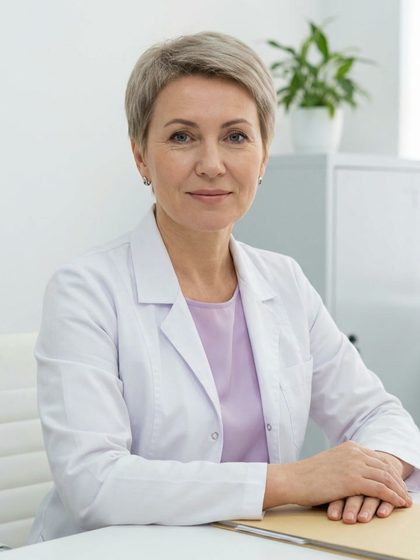
Reviewed byOlga Smirnova, MDAddiction psychiatrist, experience 27 years · updated 8 Nov 2026
Key facts
- ICD-10 code
- F10.2
- Who provides care
- A psychiatrist-addiction specialist (narcologist); for psychotherapeutic methods, a psychotherapist (a medical doctor)
- Where
- At the clinic in Almaty or at home after a preliminary examination
- Duration
- The procedure takes 30 minutes to 2 hours; the duration of effect is set individually
- Anonymity
- No registry, medical confidentiality, under a name of your choice
- When it is urgent
- A severe reaction after drinking alcohol following coding — call 103 or 112
- Outcome
- Support for sobriety as part of comprehensive addiction treatment
What you should know
People often ask me about coding right during a house call — the IV drip is still running, the person has barely sobered up, and the relatives already want to “code him today.” I calmly explain why that is not possible. Any method requires sobriety: usually at least several days, and longer for some medications. Before that, an examination is needed, a conversation about contraindications, and sometimes blood tests and an ECG. And most importantly, the person must want it themselves; without that, coding does not work.
A few days after the IV drip, we usually meet again — at the clinic or at home. It might be an apartment in the Alatau district, a cottage in Kaskelen, or an office in the city center if the person prefers to come in on their own. The doctor talks about the options, how they work and their risks, answers questions, and the patient signs an informed consent form. Only after that is a date set for the procedure, and we plan follow-up care in advance.
Who Alcohol Coding May Be Right For
- the person wants to stop drinking themselves and is looking for extra support
- there have already been relapses in the first weeks of sobriety after binge treatment
- the person has been steadily sober for several days and has no acute symptoms
- a “pause” is needed to restore health, work and relationships
- there are no contraindications related to the heart, liver or mental state
- the person is ready to work with a psychotherapist at the same time
- the family understands that coding is part of treatment, not magic
If heavy drinking has lasted more than two or three days, or there is shaking, vomiting, blood-pressure spikes or insomnia, you need a doctor rather than stopping alone. Phone advice is free. For seizures, confusion or hallucinations call 103 or 112.
How Coding Works and Why Preparation Is Needed
“Coding” covers a range of methods. Medication-based methods create a physiological reaction when alcohol is consumed or reduce cravings: the person knows that a drink will make them very ill, and this helps them hold back. Psychotherapeutic methods rely on suggestion and building a commitment to sobriety. No method “erases” addiction, but it can buy time for new habits to take hold and for the person to learn to live without alcohol.
Preparation is needed for several reasons. Medications that cause a reaction to alcohol are dangerous if alcohol is still in the blood — hence the requirement for sobriety. Contraindications include heart and liver disease, mental disorders and pregnancy. And psychotherapeutic methods require the person to be fully conscious, to understand what they are agreeing to and to take part voluntarily. That is why coding someone “secretly,” without their knowledge, is unacceptable.
How Alcohol Coding Works: From Consultation to Follow-Up
The first step can be taken online: a video consultation with an addiction doctor to discuss the history of drinking, previous treatment attempts, illnesses and expectations. Then comes an in-person examination, blood tests and an ECG if needed, and confirmation of the period of sobriety. The doctor explains the chosen method, how it works and possible reactions, and a written informed consent form is signed. The procedure is carried out at the clinic or at home, followed by monitoring and check-in calls during the first weeks.
Coding is contraindicated with alcohol intoxication or an insufficient period of sobriety; with acute or serious chronic heart, liver or kidney disease; with psychosis; with epilepsy for certain methods; during pregnancy and breastfeeding; and without the person’s own consent. Drinking alcohol after medication-based coding can cause a severe reaction — in that case, call 103 or 112.
How we help
Chemical protection
A medication-based method (disulfiram-type therapy) using drugs that interfere with the breakdown of alcohol or reduce cravings for it. The medication is given intravenously or intramuscularly after sobriety has been confirmed and an examination has been done. The person knows that drinking will cause a pronounced reaction: flushing, a pounding heart, nausea and a drop in blood pressure. The doctor explains the details and risks before the consent form is signed.
Implant
A medication is placed under the skin under sterile conditions; it is released gradually and maintains its effect for a set period. The procedure takes about half an hour under local anesthesia. An examination, a period of sobriety and consent are mandatory beforehand. The implant does not replace treatment but serves as support during the first months of sobriety.
Psychotherapeutic coding
Methods based on suggestion and building a commitment to giving up alcohol, including the Dovzhenko method (a suggestion-based technique developed in the former USSR). They are carried out by a psychotherapist (a medical doctor) in an individual or group session. Their effectiveness depends on the person’s motivation and trust. We say honestly that these are psychotherapeutic methods, not a “blocking” of the brain.
Follow-up after the procedure
Coding works better when it is accompanied by addiction psychotherapy, work with the family and, if needed, treatment of anxiety, depression or insomnia. We agree on follow-up appointments, check-in calls and consultations with a psychotherapist. When the period of effect ends, we discuss how to stay sober going forward, without an abrupt “return to the old ways.”
Myths and facts
MythA “coded” person will never want to drink again
FactCoding does not completely remove cravings and does not work “forever.” It provides support and time for change. The result depends on motivation, support and participation in treatment, so we make no “for life” promises.
MythYou can code a person without telling them
FactCoding without the patient’s knowledge and consent is unacceptable and life-threatening: drinking alcohol after a medication-based method can cause a severe reaction. We carry out the procedure only with written consent.
MythCoding harms physical and mental health
FactWhen contraindications and sobriety periods are respected and an examination has been done, the methods are safe. The risks are mainly associated with drinking alcohol while the method is in effect, which is why the doctor explains in detail beforehand what must not be done.
How a home visit works
- Call or message usThe dispatcher answers 24/7 and in 3–5 minutes checks the person's condition, age, how long the drinking or use has lasted, chronic conditions and the address. No surname needed.
- The doctor sets offAn addiction doctor or psychiatrist comes with equipment and medication. Travel time depends on the district — usually within an hour. If inpatient care or an ambulance is needed, we'll say so straight away.
- Examination and treatmentBlood pressure, pulse, oxygen saturation, blood sugar if needed and a neurological check. Then an IV drip or other treatment as indicated, 1–3 hours.
- A plan for the next daysAdvice for the family on what to do overnight and tomorrow, phone follow-up and a repeat visit if needed.
- Further treatmentCoding, psychotherapy, rehab or psychiatric follow-up — once the acute state has passed and the person is ready.
Prices in Almaty
| Consultation and assessment before the procedure | 10 000 ₸ |
| Procedure (standard) | 50 000 ₸ |
| Procedure (extended) | 80 000 ₸ |
| Phone advice | free |
The final cost is agreed before treatment starts. Prices are in tenge and do not constitute a public offer.
Where to get help
In almaty you can get help at home, at one of our two branches (84 Zhandosova St., Almaty, 21 Seyfullina Ave., office 11, Almaty) or online if you need a consultation rather than a procedure. The dispatcher answers 24/7 and will tell you straight away which option is safest.
Confidential and private
Information about your request, diagnosis and treatment is protected by medical confidentiality under the Code of the Republic of Kazakhstan “On Public Health and the Healthcare System”. We do not share it with employers, schools, the police or neighbours; the only exceptions are those expressly set by law. A first name is enough to call us, and paid confidential treatment does not mean a registry entry.
Questions and answers
How many days do you need to stay sober before coding?
The period depends on the method and is set by the doctor. Medication-based coding usually requires several days of complete sobriety, sometimes more. Before the procedure, the doctor checks when the person last drank and, if necessary, performs a test to rule out a dangerous reaction.
Which method should I choose?
The choice depends on the history of the addiction, health, previous experience and the person’s preferences. A medication-based method suits some people, a psychotherapeutic one suits others. During the consultation, a Narcology 24 doctor will explain the pros and limitations of each and help you decide without pushing a particular option.
How long does coding last?
The duration is discussed individually: it depends on the method, the person’s health and their goals. People often start with a shorter period and then extend it. What matters is not only the duration of effect but also what happens alongside it: psychotherapy, family support, and restoring health and a normal rhythm of life.
Can coding be done at home?
Some methods can be carried out at home after an in-person examination, if conditions allow and there are no contraindications. The doctor will come to any district of Almaty or to the suburbs. An implant, which requires sterile conditions, is preferably placed at the clinic, where everything is set up for it.
What happens if you drink after coding?
With medication-based methods, a severe reaction is possible: a pounding heart, a drop in blood pressure, difficulty breathing and vomiting. In that case, call 103 or 112 immediately. If you feel the urge to drink, it is better to call us right away — the doctor will help you get through that moment and adjust the treatment.
Will my employer find out about the coding?
No. Coding is carried out anonymously, without state dispensary registration, and the information is protected by medical confidentiality under the Code of the Republic of Kazakhstan “On Public Health and the Healthcare System.” Information is disclosed only in cases expressly provided for by the law of the Republic of Kazakhstan.
Where do doctors visit in Almaty and where are the branches?
Home visits cover all city districts and nearby settlements, 24/7. Appointments at two branches: 84 Zhandosova St., Almaty and 21 Seyfullina Ave., office 11, Almaty. Phone in Almaty: +7 (700) 309-29-88.
Sources and methodology
This page was prepared by the Narcology 24 medical editorial team based on:
- International Classification of Diseases ICD-10 and ICD-11, World Health Organization
- Clinical diagnosis and treatment protocols of the Ministry of Health of the Republic of Kazakhstan
- Code of the Republic of Kazakhstan “On Public Health and the Healthcare System”
- NICE (UK) guidelines on alcohol and drug misuse and mental health conditions
- WHO recommendations on the treatment of substance use disorders
This information is for reference only and does not replace a consultation with a specialist. Editorial policy