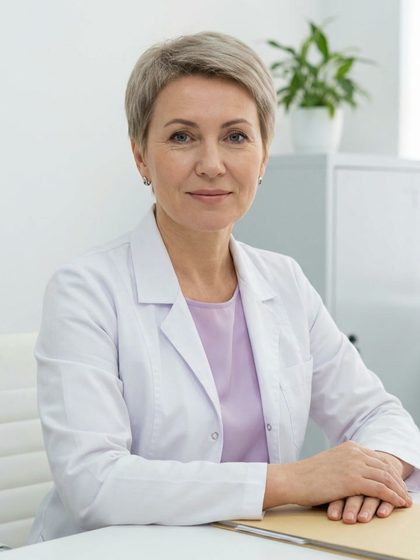
Reviewed byOlga Smirnova, MDAddiction psychiatrist, experience 27 years · updated 8 Nov 2026
Key facts
- ICD-10 code
- F10.2
- Who provides it
- A psychiatrist-narcologist; psychotherapeutic methods are provided by a doctor trained in psychotherapy
- Where
- In the addiction physician's office at the clinic in Ekibastuz; some stages can follow a home visit
- Duration
- The procedure takes 30–90 minutes; the effect lasts from several months and is set individually
- Confidentiality
- Provided anonymously, with no registration in the state narcology registry
- When it is an emergency
- If you drank after coding and have chest pain, difficulty breathing or fainting — call 103 or 112
- Outcome
- Support for the decision not to drink during treatment for the dependence
What you should know
The term “coding” is widely used in CIS countries, but there is no such separate method in international medical classifications. It covers several approaches: pharmacological sensitization to alcohol (so-called chemical protection, a disulfiram-type therapy), opioid receptor antagonists that reduce the pleasure from alcohol, and suggestion-based psychotherapy. The common principle is to give the patient an external anchor to help them stay sober for a set period.
Alcohol coding in Ekibastuz at Narcology 24 is carried out by a psychiatrist-narcologist after a consultation and assessment. The mandatory conditions are the patient's own voluntary decision, sobriety for a period set by the doctor depending on the method, no contraindications, and written informed consent. Coding is not a “cure for life”: it is a tool that works best combined with psychotherapy and family support.
Who may benefit from alcohol coding
- a person with alcohol dependence who has decided for themselves to stop drinking
- those who have had long periods of sobriety but have relapsed
- patients after detox who need extra support
- people for whom external motivation for a set period matters
- those who are also in psychotherapy or a rehab program
- people without severe heart or liver disease or mental disorders
- those who are ready to stay sober for the required period before the procedure
If heavy drinking has lasted more than two or three days, or there is shaking, vomiting, blood-pressure spikes or insomnia, you need a doctor rather than stopping alone. Phone advice is free. For seizures, confusion or hallucinations call 103 or 112.
How coding works and what its limitations are
The mechanism depends on the method. Sensitizing drugs disrupt the breakdown of alcohol, so if a person drinks, acetaldehyde builds up — causing flushing, a pounding heart, nausea and a drop in blood pressure. According to clinical studies and NICE guidance, opioid receptor antagonists reduce cravings and the rewarding effect of alcohol. Psychotherapeutic methods rely on suggestion and building a mindset geared toward sobriety.
None of the methods removes the cause of the dependence — changes in the brain's reward system, habitual ways of coping with stress and the person's social environment. That is why coding on its own, without other treatment, has limited effectiveness. According to international guidelines, the best results come from combining medication support with psychosocial interventions such as cognitive behavioral therapy and family therapy.
How alcohol coding works: the stages
Stage 1 — an online or in-person consultation: the doctor asks about the drinking history, the length of sobriety, illnesses, medications and motivation. Stage 2 — assessment: an examination, blood pressure, and an ECG and lab tests as indicated. Stage 3 — choosing the method and a detailed explanation of how it works, its risks and duration. Stage 4 — signing the informed consent form. Stage 5 — the procedure. Stage 6 — monitoring and scheduled consultations for as long as the coding is in effect.
Coding is not carried out while a person is intoxicated or has not been sober for the required period, in acute or severe chronic heart, liver or kidney disease, epilepsy, psychotic disorders, pregnancy and breastfeeding, or without the patient's own wish. If after the procedure a person drinks and has difficulty breathing, chest pain or loses consciousness, call 103 or 112.
How we help
Chemical protection (sensitizing therapy)
The doctor administers a drug that blocks the breakdown of acetaldehyde. If the person drinks alcohol, a severe reaction develops, so the patient receives a detailed explanation of the risks. The method requires strict sobriety before the procedure and a heart check. More about this method, including contraindications, can be found on the chemical protection page.
Opioid receptor blockade
Opioid receptor antagonists do not cause a severe reaction to alcohol; instead, they reduce cravings and the pleasure from drinking. This approach is used in international practice and is included in NICE guidance. Before it is prescribed, opioid use must be ruled out, because the drug can trigger withdrawal.
Psychotherapeutic coding
Suggestion-based methods, including the Dovzhenko method, rely on suggestion and building a firm mindset of sobriety in the patient. Their effect depends on how receptive the person is and on their motivation. The method does not involve giving any medication and is carried out by a doctor trained in psychotherapy after a conversation and an assessment of the patient's mental state.
Support after the procedure
Coding is a point of support, not the end of treatment. After the procedure, Narcology 24 offers scheduled consultations with an addiction physician, individual or group psychotherapy and work with the family. The doctor discusses high-risk situations with the patient and ways to cope with cravings. This approach lowers the likelihood of relapse and helps consolidate a sober lifestyle.
Myths and facts
MythCoding cures alcoholism forever
FactCoding works for a limited period and does not remove the causes of the dependence. Lasting remission requires comprehensive treatment, psychotherapy, support from loved ones and lifestyle changes.
MythA person can be coded without their knowledge
FactEvery method is used only voluntarily, with the written informed consent of a patient with legal capacity. Secret “coding” is illegal and dangerous to health, especially when drugs are slipped into food or drink.
MythIf you drink after coding, death is inevitable
FactThe consequences depend on the method. With chemical protection, the reaction really can be dangerous, which is why the doctor explains the risks in detail. Scare tactics are not part of treatment — the patient receives honest information.
How a home visit works
- Call or message usThe dispatcher answers 24/7 and in 3–5 minutes checks the person's condition, age, how long the drinking or use has lasted, chronic conditions and the address. No surname needed.
- The doctor sets offAn addiction doctor or psychiatrist comes with equipment and medication. Travel time depends on the district — usually within an hour. If inpatient care or an ambulance is needed, we'll say so straight away.
- Examination and treatmentBlood pressure, pulse, oxygen saturation, blood sugar if needed and a neurological check. Then an IV drip or other treatment as indicated, 1–3 hours.
- A plan for the next daysAdvice for the family on what to do overnight and tomorrow, phone follow-up and a repeat visit if needed.
- Further treatmentCoding, psychotherapy, rehab or psychiatric follow-up — once the acute state has passed and the person is ready.
Prices in Ekibastuz
| Consultation and assessment before the procedure | 8 000 ₸ |
| Procedure (standard) | 40 000 ₸ |
| Procedure (extended) | 64 000 ₸ |
| Phone advice | free |
The final cost is agreed before treatment starts. Prices are in tenge and do not constitute a public offer.
Where to get help
“Alcohol coding” in Ekibastuz is available 24/7, including weekends. Home visits: all city districts and nearby settlements. For appointments, Narcology 24 has two branches: 51 Lenina St., Ekibastuz and 24 Mukhtara Auezova St., office 30, Ekibastuz. If you live elsewhere in Pavlodar Region, call us and we'll advise the fastest way to get help.
Confidential and private
in Ekibastuz our doctor can come in ordinary clothes in an unmarked car. Treatment documents are given only to the patient. If you need a certificate or sick note, this is discussed separately and only at your request.
Questions and answers
How long do you need to stay sober before coding?
The doctor sets the required period of sobriety depending on the chosen method and the patient's condition. For medication-based methods it is usually longer than for psychotherapeutic ones. If the person cannot stay sober for the required time, detox is done first and coding is postponed.
For how long can you be coded?
The period is chosen individually — from several months to longer, with the option of extending it. The doctor recommends starting with a realistic period supported by psychotherapy. Promises of “lifelong” coding are not backed by medical evidence.
Which coding method is best?
There is no universally best method. The choice depends on the patient's health, motivation, previous experience and preferences. Medication-based methods require an assessment, while psychotherapeutic ones depend on how receptive a person is to suggestion. The decision is made together with the doctor after a consultation.
Can you be coded if you have heart disease?
Some methods, especially chemical protection, are contraindicated in coronary heart disease, arrhythmias and severe high blood pressure. For people with heart disease, the doctor may offer an alternative — psychotherapeutic methods or medications that reduce cravings — after an assessment and an ECG.
Will anyone find out about the coding?
No. The procedure is anonymous and does not involve registration with the state narcology registry. The information is protected by medical confidentiality under the Code of the Republic of Kazakhstan “On Public Health and the Healthcare System” and is disclosed only in cases provided for by law.
What should I do if cravings appear after coding?
Cravings are a normal part of recovery, not a sign of failure. It is important to discuss them with your doctor or psychotherapist before a relapse happens. The specialist will help you understand your triggers, adjust treatment if necessary and suggest how to cope with difficult situations.
Where do doctors visit in Ekibastuz and where are the branches?
Home visits cover all city districts and nearby settlements, 24/7. Appointments at two branches: 51 Lenina St., Ekibastuz and 24 Mukhtara Auezova St., office 30, Ekibastuz. Phone in Ekibastuz: +7 (700) 309-30-65.
Sources and methodology
This page was prepared by the Narcology 24 medical editorial team based on:
- International Classification of Diseases ICD-10 and ICD-11, World Health Organization
- Clinical diagnosis and treatment protocols of the Ministry of Health of the Republic of Kazakhstan
- Code of the Republic of Kazakhstan “On Public Health and the Healthcare System”
- NICE (UK) guidelines on alcohol and drug misuse and mental health conditions
- WHO recommendations on the treatment of substance use disorders
This information is for reference only and does not replace a consultation with a specialist. Editorial policy