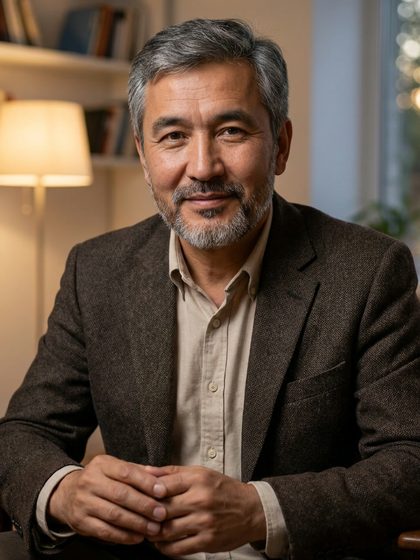
Reviewed byArman Magzhanov, MDPsychiatrist, experience 24 years · updated 8 Nov 2026
Key facts
- ICD-10 code
- F42
- Who provides it
- A psychiatrist and a psychotherapist (CBT)
- Where
- In the office, online, and exposure sessions in real-life settings
- Duration
- CBT 12–20 sessions, a medication course of 12 months or more
- Anonymity
- No ID and no registry entry, full medical confidentiality
- When it is urgent
- Suicidal thoughts, severe depression — call 103 or 112
- Outcome
- Weaker obsessions and less time spent on rituals
What you should know
OCD (F42 in ICD-10) is a disorder in which intrusive thoughts, images or urges invade the mind and cause intense anxiety, disgust or a feeling that something is “not right.” To reduce the discomfort, the person performs compulsions: washing their hands, checking locks and electrical appliances, counting, arranging objects symmetrically or repeating phrases in their head. The relief is short-lived and the cycle repeats, sometimes taking up several hours a day.
People with OCD usually understand that their thoughts and rituals are excessive but cannot stop; as a result, they are often ashamed of their symptoms and hide them for years, even from those closest to them. OCD treatment in Shu at Narcology 24 begins with a detailed diagnosis: the doctor assesses the content of the obsessions, how much time the rituals take, how much they disrupt life, and any co-existing conditions — depression, anxiety, tics. Psychotherapy and, if needed, medication are then selected.
Signs of Obsessive-Compulsive Disorder
- intrusive thoughts about dirt, contamination or illness that are hard to push away
- repeated handwashing or cleaning until the skin becomes irritated
- checking locks, the stove, the iron, messages and documents over and over
- frightening, unwanted thoughts about harming loved ones
- a need for symmetry, order or the “right” number of repetitions
- mental rituals: counting, repeating phrases or prayers, “neutralizing” thoughts
- rituals take up more than an hour a day and interfere with work and relationships
If two or three points apply, it is worth seeing a doctor. Phone advice is free and confidential. If life is at risk, call 103 or 112.
Why OCD Develops
OCD develops under the influence of several factors: genetic predisposition, the way neural circuits involved in control and threat assessment work, personality traits — a tendency toward perfectionism and an inflated sense of responsibility — and stressful events. The first symptoms often appear in childhood or adolescence. In some people, onset is linked to pregnancy and the postpartum period, past infections or a trauma.
The disorder is maintained by negative reinforcement: a ritual quickly reduces anxiety, and the brain “learns” that without the ritual something bad would happen. Over time, rituals become more elaborate and avoidance spreads. It is important to distinguish OCD from obsessive-compulsive personality disorder, anxiety disorders and tics, as well as from delusional ideas — this is done by the psychiatrist during diagnosis.
How OCD Treatment Works: Step by Step
The stages: 1) a consultation with a psychiatrist — in person or online — to assess the obsessions using a specialized scale and determine the severity and any co-existing disorders; 2) psychoeducation — an explanation of the obsession–ritual cycle; 3) building a hierarchy of anxiety-provoking situations; 4) a course of CBT with exposure and response prevention, with homework between sessions; 5) selection of medication when indicated; 6) review of the effect every 4–6 weeks and a plan to prevent flare-ups.
Outpatient OCD treatment in Shu is not enough in severe cases where the person cannot manage basic daily tasks, in severe depression with suicidal thoughts, or when they refuse food because of obsessions. In such situations, inpatient care or an intensive program is discussed. If there is a threat to life, call 103 or 112. OCD in children and teenagers is treated with the involvement of parents.
How we help
CBT with exposure and response prevention
This is the main treatment for OCD according to NICE guidelines. Guided by the therapist, the patient gradually faces frightening situations — for example, touching a “dirty” surface — and refrains from performing the ritual. The anxiety rises at first and then subsides on its own. With each repetition, the obsession loses its power. A course includes 12–20 sessions plus regular practice on your own.
Medication treatment
For moderate and severe OCD, the psychiatrist may prescribe antidepressants from the class used for this disorder. In OCD, the effect develops more slowly than in depression — usually over 8–12 weeks — and a longer course is often needed. If the response is insufficient, the doctor considers augmenting the treatment. Stopping medication on your own is not acceptable.
Cognitive work
The psychotherapist helps the patient reconsider the beliefs that feed OCD: about excessive responsibility, the need for complete control, and the idea that “a bad thought is the same as a bad deed.” The patient learns to treat intrusive thoughts as mental noise rather than a danger signal, and not to argue with them.
Family involvement
Loved ones are often drawn into the rituals: they answer endless questions, recheck things and help the person avoid triggers. This unintentionally keeps the disorder going. In consultations, relatives learn how to support the person without taking part in rituals and how to respond to requests for reassurance calmly and without conflict.
Myths and facts
MythOCD is just a love of order and cleanliness
FactNeatness is a personality trait that causes no suffering. In OCD, a person is tormented by intrusive thoughts and feels compelled to perform rituals, even though they understand the rituals make no sense. It is an illness, not a habit.
MythIf I have frightening thoughts, I must be dangerous
FactIntrusive thoughts about causing harm in OCD are horrifying precisely because they go against what the person wants. People with OCD do not act on such thoughts. It is a symptom that responds well to treatment.
MythOCD can't be treated — you just have to live with it
FactWith modern therapy, symptoms ease significantly in most patients. CBT with exposure and medication, when indicated, make it possible to regain control over your time and your life, and maintenance visits reduce the risk of flare-ups.
How a home visit works
- Call or message usThe dispatcher answers 24/7 and in 3–5 minutes checks the person's condition, age, how long the drinking or use has lasted, chronic conditions and the address. No surname needed.
- The doctor sets offAn addiction doctor or psychiatrist comes with equipment and medication. Travel time depends on the district — usually within an hour. If inpatient care or an ambulance is needed, we'll say so straight away.
- Examination and treatmentBlood pressure, pulse, oxygen saturation, blood sugar if needed and a neurological check. Then an IV drip or other treatment as indicated, 1–3 hours.
- A plan for the next daysAdvice for the family on what to do overnight and tomorrow, phone follow-up and a repeat visit if needed.
- Further treatmentCoding, psychotherapy, rehab or psychiatric follow-up — once the acute state has passed and the person is ready.
Prices in Shu
| Psychiatrist consultation | 12 000 ₸ |
| Follow-up consultation | 9 500 ₸ |
| Psychotherapy session (50 min) | 12 000 ₸ |
| Phone advice | free |
The final cost is agreed before treatment starts. Prices are in tenge and do not constitute a public offer.
Where to get help
Narcology 24 in Shu: our duty team makes home visits day and night, usually within an hour (all city districts and nearby settlements). Two branches for appointments and procedures — 157 Bayzak batyra St., Shu and 118 Abaya St., Shu. When indicated, we arrange admission and transport.
Confidential and private
Information about your request, diagnosis and treatment is protected by medical confidentiality under the Code of the Republic of Kazakhstan “On Public Health and the Healthcare System”. We do not share it with employers, schools, the police or neighbours; the only exceptions are those expressly set by law. A first name is enough to call us, and paid confidential treatment does not mean a registry entry.
Questions and answers
How do I know if I have OCD?
If intrusive thoughts cause you intense anxiety, you perform rituals to reduce it, you recognize that they are excessive, and all of this takes more than an hour a day or interferes with your life, it is worth seeing a psychiatrist. The diagnosis is made on the basis of an interview and a standardized scale.
Can OCD be treated online?
Yes. Diagnosis and CBT with exposure work effectively by video call, and doing exposure at home is sometimes even more convenient, because the obsessions are often tied to the home environment. Online OCD treatment in Shu is available from any device with a camera.
How long does OCD treatment take?
A course of CBT usually lasts 3–5 months. Medication treatment, if prescribed, is continued for at least 12 months after the effect is achieved and then tapered gradually. The exact plan depends on the severity of the disorder and how long it has lasted.
Do sedatives help with OCD?
Sedatives and benzodiazepines do not treat OCD and are not recommended as the main treatment. They may reduce anxiety for a short time, but they do not affect the obsessions and carry a risk of dependence. CBT and specifically selected medications are what work.
Can relatives take part in treatment?
Yes, and it is often helpful, especially if loved ones are drawn into the rituals. With the patient's consent, the Narcology 24 doctor and psychotherapist hold consultations for the family, explaining how to offer support without reinforcing rituals and how to behave in difficult moments.
Will I be put on a registry if I have OCD?
No. Paid anonymous treatment is provided without registration on the dispensary registry. Information about your visit and diagnosis is protected by medical confidentiality under the Code of the Republic of Kazakhstan “On Public Health and the Healthcare System” and is not shared with your employer or relatives without your consent.
Where do doctors visit in Shu and where are the branches?
Home visits cover all city districts and nearby settlements, 24/7. Appointments at two branches: 157 Bayzak batyra St., Shu and 118 Abaya St., Shu. Phone in Shu: +7 (700) 309-30-65.
Sources and methodology
This page was prepared by the Narcology 24 medical editorial team based on:
- International Classification of Diseases ICD-10 and ICD-11, World Health Organization
- Clinical diagnosis and treatment protocols of the Ministry of Health of the Republic of Kazakhstan
- Code of the Republic of Kazakhstan “On Public Health and the Healthcare System”
- NICE (UK) guidelines on alcohol and drug misuse and mental health conditions
- WHO recommendations on the treatment of substance use disorders
This information is for reference only and does not replace a consultation with a specialist. Editorial policy